An inshore fishing charter Myrtle Beach outing puts anglers directly into the calm backwaters, tidal creeks, and grass flats that surround the Grand Strand. Rather than fighting rough open-water swells, guests fish protected waters close to shore, which makes these trips ideal for families, beginners, and anyone short on time. Because the boats stay within the marsh and nearshore creeks, seasickness is rarely an issue, and the fishing itself stays active from morning through afternoon. This guide explains what to expect, which species you’ll target, and how to book a trip that matches your group’s experience level.
What Is an Inshore Fishing Charter in Myrtle Beach?
An inshore fishing charter is a guided boat trip that targets fish living in shallow, protected water such as creeks, marshes, and inlets, typically within a few miles of the dock. These trips usually last four to six hours and focus on species like redfish, trout, and flounder.
In contrast to nearshore or offshore trips, inshore charters rarely leave sight of land. Guides use the tides to position the boat over feeding zones, moving spots as water levels change throughout the day. Furthermore, most operators supply rods, reels, bait, and the required fishing license, so guests do not need to bring their own equipment.
Why Book an Inshore Fishing Charter Myrtle Beach Trip?
Booking an inshore fishing charter Myrtle Beach trip offers several practical advantages over other charter types. First, because trips are private rather than shared, your group controls the pace, target species, and stops throughout the day. Second, calmer backwaters mean less time spent battling waves and more time actually fishing. For a deeper walkthrough, see our Inshore Fishing Charters In Myrtle Beach, SC.
Local captains also bring detailed knowledge of tide movement, structure, and seasonal fish patterns around Murrells Inlet, the Waccamaw River, and nearby creeks. As a result, guests often catch more fish in less time compared to fishing unfamiliar water alone. In addition, many Myrtle Beach charter operators, including private inshore trips built around your group’s experience level, supply rods, reels, bait, tackle, and the required state fishing license. That means guests can show up ready to fish without renting or buying gear beforehand.
Finally, inshore trips tend to run shorter than offshore excursions, typically four to six hours, which suits families with young children or anglers who want a half-day activity rather than a full day on the water.
Best Inshore Fish Species Around the Grand Strand
Redfish, also called red drum, rank as the signature catch on most inshore trips. According to the South Carolina Department of Natural Resources, anglers may keep redfish measuring between 15 and 23 inches, with a daily limit of three fish per person, so guides watch these numbers closely when deciding which fish to release. For a deeper walkthrough, see our Briarcliffe Acres: A Secluded Gem in South Carolina, USA.
Spotted seatrout, flounder, black drum, and sheepshead round out the typical catch list. Because these species feed differently depending on tide stage, guides often fish multiple spots in a single trip. For example, flounder tend to hold near sandy bottoms and creek mouths, while trout favor grass edges and deeper holes.
Consequently, a single four-hour trip can produce several species without ever leaving protected water. Anglers interested in comparing inshore species availability against nearshore and offshore options can review a broader breakdown of Myrtle Beach charter types before booking.
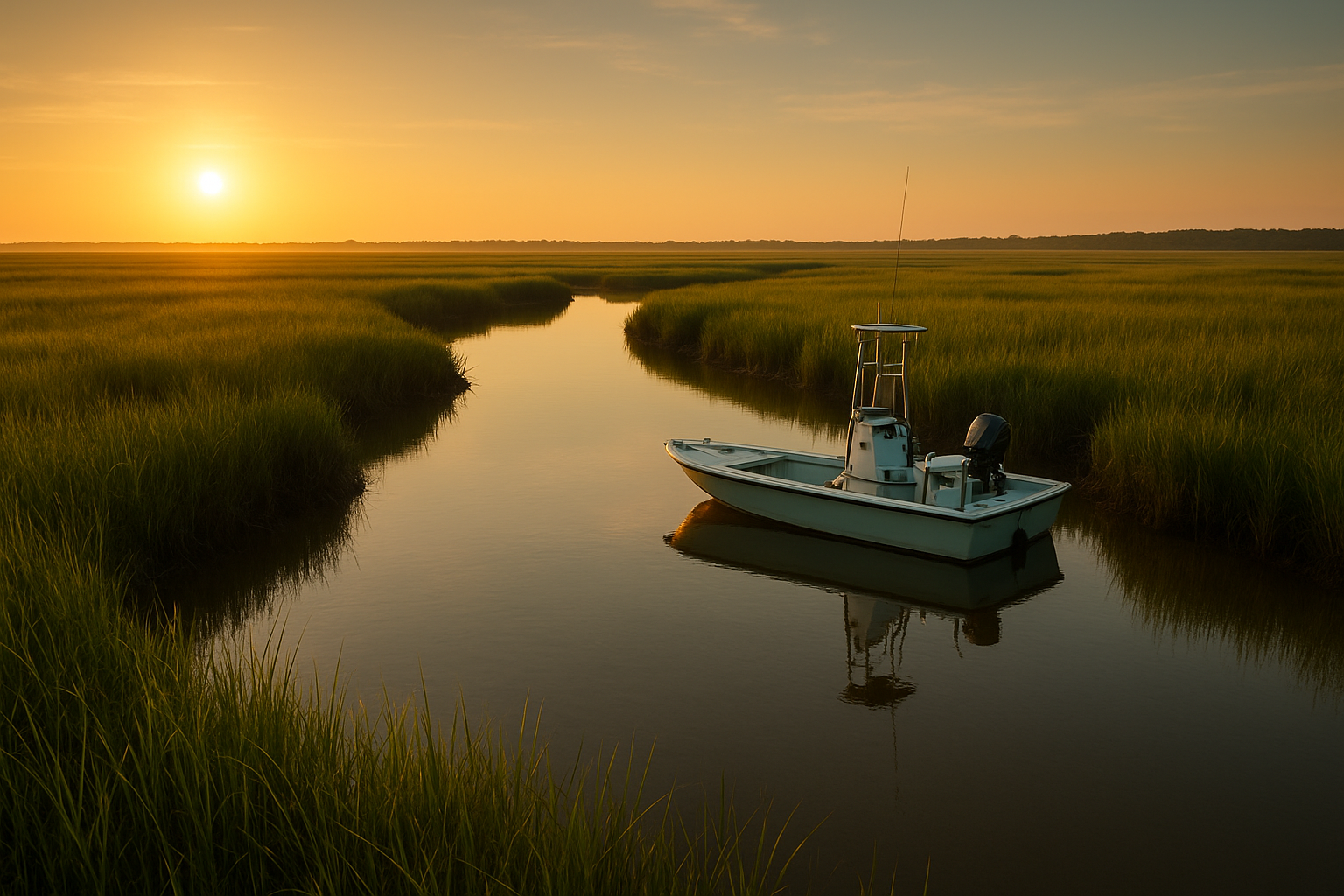
Calm tidal creeks like this one are typical stops on an inshore fishing charter Myrtle Beach trip. For a deeper walkthrough, see our Inland Fishing Charter.
What to Expect on a Myrtle Beach Inshore Fishing Trip
Most inshore trips depart early morning or midday, timed around the tide rather than the clock, since fish activity shifts as water rises and falls. Boats used for inshore charters sit shallower than offshore vessels, which lets captains push into skinny creeks that larger boats cannot reach.
During the trip, expect frequent stops as the guide reads structure, current, and bait activity. Unlike deep sea fishing, there is little downtime between bites in productive conditions. Moreover, guides typically explain technique along the way, which makes these trips a practical option for anglers who have never fished saltwater before.
Weather plays a smaller role inshore than offshore, since marshes and creeks stay protected from wind and swell. However, captains still monitor storms and lightning, and they will reschedule when safety is a concern.
How to Book Your Inshore Fishing Trip: Step-by-Step
- Decide on group size and experience level. Private charters adjust the trip plan based on whether you’re bringing young children, first-time anglers, or experienced fishermen chasing a specific species.
- Check tide and season timing. Contact the charter operator to confirm which dates match strong tide movement and target species activity, since this affects both scheduling and expected catch.
- Choose trip length and target species. Most inshore trips run four to six hours, though some operators offer shorter or extended options depending on how far you want to travel within the marsh.
- Confirm what’s included. Ask whether rods, reels, bait, tackle, and fishing licenses are provided so you know exactly what to bring on trip day. For a deeper walkthrough, see our Briarcliffe Acres: A Secluded Gem in South Carolina, USA.
- Reserve your date and prepare. Book directly through the operator’s website or phone line, then plan to arrive at the dock roughly fifteen minutes before departure with sunscreen, water, and appropriate footwear.
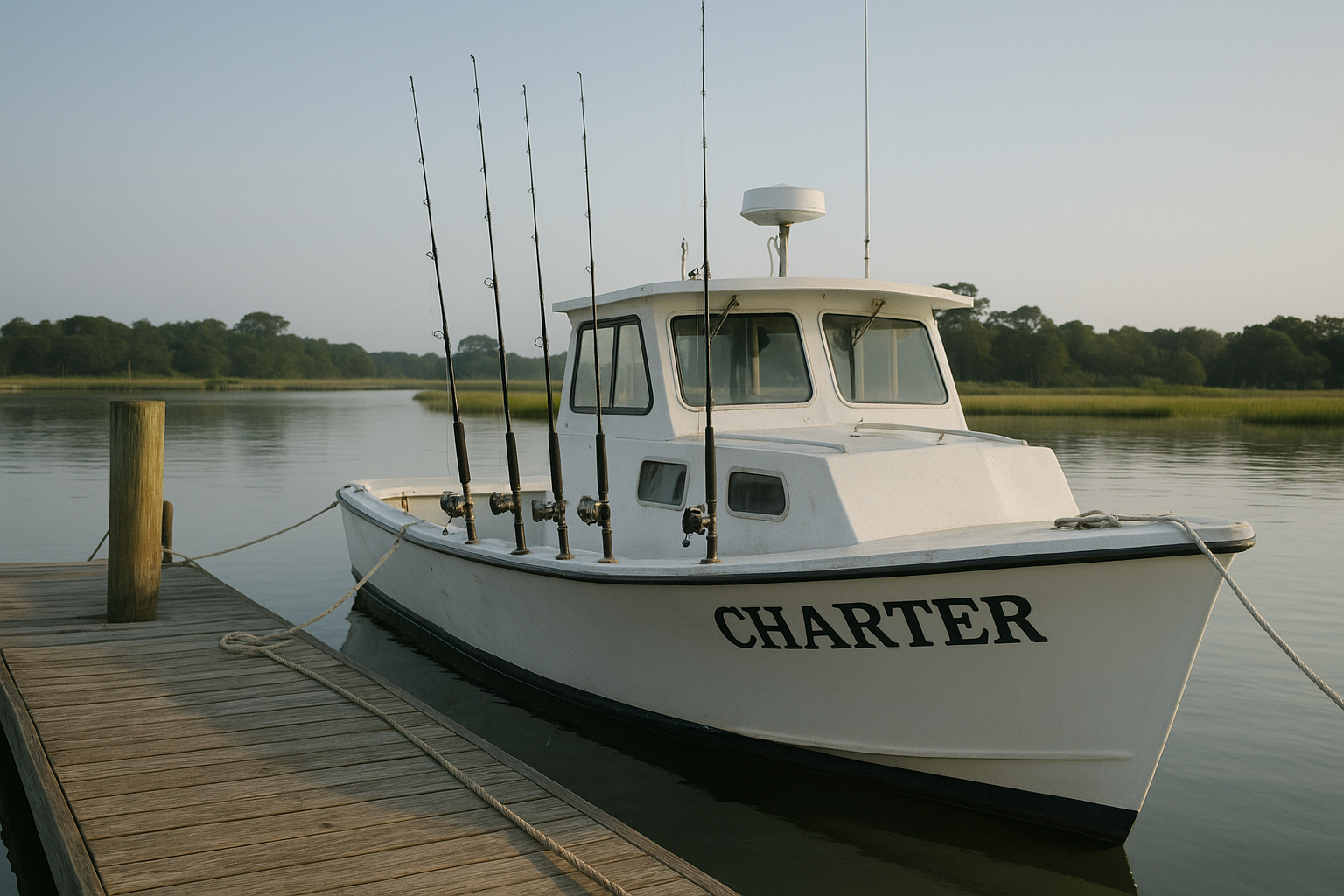
A private charter boat ready for the day’s inshore fishing trip near the Grand Strand. For a deeper walkthrough, see our Inland Fishing Charter.
Inshore vs. Nearshore vs. Offshore: Which Charter Fits You?
| Charter Type | Typical Distance | Best For |
|---|---|---|
| Inshore | Marshes, creeks, within sight of land | Families, beginners, calm water |
| Nearshore | A few miles offshore | Anglers wanting bigger fish, moderate seas |
| Offshore / Gulf Stream | 20+ miles, deep water | Experienced anglers, full-day trips |
Choosing between these options really depends on your priorities. If calm water, shorter trip times, and easy access for kids matter most, then an inshore trip usually fits best. On the other hand, anglers chasing bigger game fish or open-water species may prefer nearshore or Gulf Stream trips instead.
Many first-time visitors start with an inshore trip before working up to offshore fishing on a later visit. You can compare full charter details at Low Country Fishing Charters or review this inshore-focused trip overview to see what a typical day looks like.
Best Season for Inshore Fishing Near Myrtle Beach
Inshore fishing stays productive nearly year-round along the Grand Strand, though activity peaks differently by species. Spring and fall generally produce the most consistent redfish and trout action, as water temperatures sit in a comfortable range for feeding.
Summer months bring warm, stable weather, which suits families and beginners, although fish may feed more actively during early morning hours before the heat sets in. Winter trips, meanwhile, can still produce trout and redfish on the right tide, especially on sunny, wind-protected days.
Similarly, the NOAA Fisheries service tracks regional fish population data that local guides use to plan seasonal strategy, adjusting locations as water temperature shifts throughout the year. For a closer look at seasonal trip planning and pricing, see this detailed inshore fishing charter overview before you book your dates.
Golden hour casts often produce some of the best action on an inshore trip.
Frequently Asked Questions About Inshore Fishing Charters in Myrtle Beach
What is an inshore fishing charter Myrtle Beach trip?
An inshore fishing charter Myrtle Beach trip is a private, guided boat trip that fishes shallow marshes, creeks, and inlets close to shore rather than open ocean water. These trips usually last four to six hours and focus on species like redfish, trout, and flounder. For a deeper walkthrough, see our Hilton Grand Vacations Club Ocean Enclave Myrtle Beach.
How much does an inshore fishing charter cost?
Pricing varies by trip length, boat size, and group size, but most inshore charters cost less than offshore or Gulf Stream trips since they require less fuel and travel time. Contacting the operator directly gives the most accurate quote for your dates.
How long does an inshore fishing trip last?
Most inshore trips run between four and six hours, though some operators offer shorter or longer combination trips. Trip length usually depends on tide timing and how far into the marsh the captain plans to travel.
What fish can you catch inshore near Myrtle Beach?
Common inshore catches include redfish, spotted seatrout, flounder, black drum, and sheepshead. Which species bite best depends on season, tide, and water temperature during your trip.
Is inshore fishing good for beginners and kids?
Yes, inshore fishing is one of the most beginner-friendly saltwater options because the water stays calm and protected from wind and waves. Guides also provide hands-on instruction, making it practical for children and new anglers.
What’s the difference between inshore and offshore fishing?
Inshore fishing stays within marshes, creeks, and inlets close to shore, while offshore fishing travels miles into open ocean water. As a result, inshore trips are shorter, calmer, and better suited to families.
What should I bring on an inshore charter?
Most operators supply rods, reels, bait, and tackle, so guests mainly need sunscreen, sunglasses, comfortable shoes, and water or snacks. A light jacket is also useful for early morning departures.
Do I need a fishing license for an inshore charter?
In most cases, no, since licensed charter operators cover the required state fishing license under their charter license. It’s still worth confirming this detail with your chosen operator before the trip.
What’s the best time of year to book an inshore fishing charter?
Spring and fall typically offer the most consistent redfish and trout action, though inshore fishing stays productive most of the year. Booking a few weeks ahead helps secure preferred dates during peak season.
How many people can join a private inshore charter?
Group size limits depend on the boat, but private inshore charters commonly accommodate two to six anglers comfortably. Because trips are private, your group won’t be paired with other unrelated parties. For a deeper walkthrough, see our Inshore Fishing Charters In Myrtle Beach, SC.
What is a common mistake first-time inshore anglers make?
One frequent mistake is setting the hook too hard or too early, which can pull bait away from feeding fish like redfish and trout. Following the guide’s timing cues usually improves hookup rates.
Can I keep the fish I catch on an inshore charter?
Keeping fish depends on current size and bag limits, which guides monitor closely to stay compliant with state regulations. Many anglers keep a modest amount for a meal while releasing the rest.
What areas do inshore charters near Myrtle Beach fish?
Inshore trips commonly fish the marshes and creeks around Murrells Inlet, the Waccamaw River, and tidal creeks throughout the Grand Strand, including areas near North Myrtle Beach and Little River. Exact spots shift with tide stage and season. For a deeper walkthrough, see our Hilton Grand Vacations Club Ocean Enclave Myrtle Beach.
Final Thoughts
Choosing an inshore fishing charter Myrtle Beach trip gives visitors and locals alike an accessible way to experience the Grand Strand’s marshes and creeks without needing prior saltwater fishing experience. From calm, protected water to knowledgeable local guides and a strong variety of catchable species, these trips work well for families, beginners, and anyone with limited time. Whether you’re planning a first saltwater outing or comparing charter styles before your trip, booking with an experienced operator sets the stage for a productive, enjoyable day on the water. For additional details on trip types and availability, visit lowcountryfishingcharters.com.


