Jetties fishing in Myrtle Beach delivers some of the most reliable action along South Carolina’s Grand Strand. It works whether you’re casting from a private charter boat or watching tidal current slam against the rocks at Little River Inlet, Murrells Inlet, or any pass in between. Because jetties create a natural choke point for baitfish and the predators chasing them, this style of fishing holds up through nearly every season. Below, you’ll find a complete breakdown of what jetties fishing involves, which species show up at the rocks, how the Murrells Inlet jetties compare to other Grand Strand structure, and how a private trip with Low Country Fishing Charters puts you on the bite at the right moment.
Quick answer: Jetties fishing in Myrtle Beach means fishing along the rock jetties at coastal inlets, where tidal current, hard structure, and sudden depth changes overlap to concentrate species like red drum, sheepshead, and flounder. It works best from a boat positioned parallel to the rocks during a moving tide, which is exactly how a private charter approaches the Grand Strand’s jetty structure.

A rock jetty at a Grand Strand inlet — prime water for jetties fishing.
What Is Jetties Fishing?
Jetties fishing is the practice of fishing along rock jetties, the long stone structures built at inlets to stabilize navigation channels and slow shoreline erosion. As tidal water rushes past these rocks, it concentrates baitfish tight against the structure, which in turn draws in larger predators looking for an easy meal. As a result, jetties often hold fish even when the surrounding open water looks dead calm and empty.
Because a jetty is essentially a man-made reef, it functions the same way natural hard structure does elsewhere along the coast. You can read a general technical overview of how these rock structures are engineered on Wikipedia’s entry on jetties, which explains how they’re placed at inlet mouths specifically to control current flow. In addition, according to NOAA Fisheries, hard structures like jetties and reefs attract baitfish and shelter-seeking species by creating current breaks, which is one reason jetty fishing stays productive across most of the year. In practical terms, this means anglers can often find fish stacked in a small, predictable area rather than hunting across wide-open water for hours.
Why Jetty Fishing Works So Well Near the Grand Strand
The Little River Inlet jetties near North Myrtle Beach sit right where estuary water meets the open ocean, and this mixing zone is exactly what makes jetty fishing so consistent. In particular, current speed near inlet jetties can reach two to three knots during peak tidal exchange, which pins baitfish tight against the rocks and forces them into a smaller, far more vulnerable space.
Consequently, gamefish position themselves along the edges of that current to ambush prey without wasting energy swimming against it. Furthermore, the depth changes along a jetty’s length give anglers several distinct zones to work through a single tide cycle, from shallow rock edges down to deeper channel water. This variety is exactly why experienced captains treat jetty structure as a near-automatic stop on many inshore and nearshore trips, rather than an occasional detour.
Grand Strand Jetty Structures: Little River Inlet vs. Murrells Inlet
Not every jetty fishes the same way, and knowing the difference between the Grand Strand’s two most popular inlet systems helps you set realistic expectations before you ever leave the dock.
Little River Inlet Jetties
Sitting at the South Carolina–North Carolina border, the Little River Inlet jetties see heavy tidal exchange and a steady flow of baitfish moving between the Intracoastal Waterway and the ocean. As a result, this stretch produces consistent red drum, sheepshead, and flounder action, and it anchors many of the trips run out of the Little River Fishing Fleet docks nearby.
Murrells Inlet Jetties
Further south, the Murrells Inlet jetties mark one of South Carolina’s few natural, non-dredged inlets, and they’re known for a narrower channel with noticeably faster current on strong tides. That said, the core approach to fishing them is the same: work the current seams, hold tight to structure, and let moving water do the work of pushing bait into range. Either system rewards an angler who understands tide stage over one who simply shows up and starts casting at random.
Other Grand Strand Inlet Structure
Beyond these two, smaller jetty and groin structures dot the coastline between them. A private charter captain who fishes the area daily knows which of these hold bait on any given tide, which is one of the clearest advantages of booking a guided trip over guessing from shore.
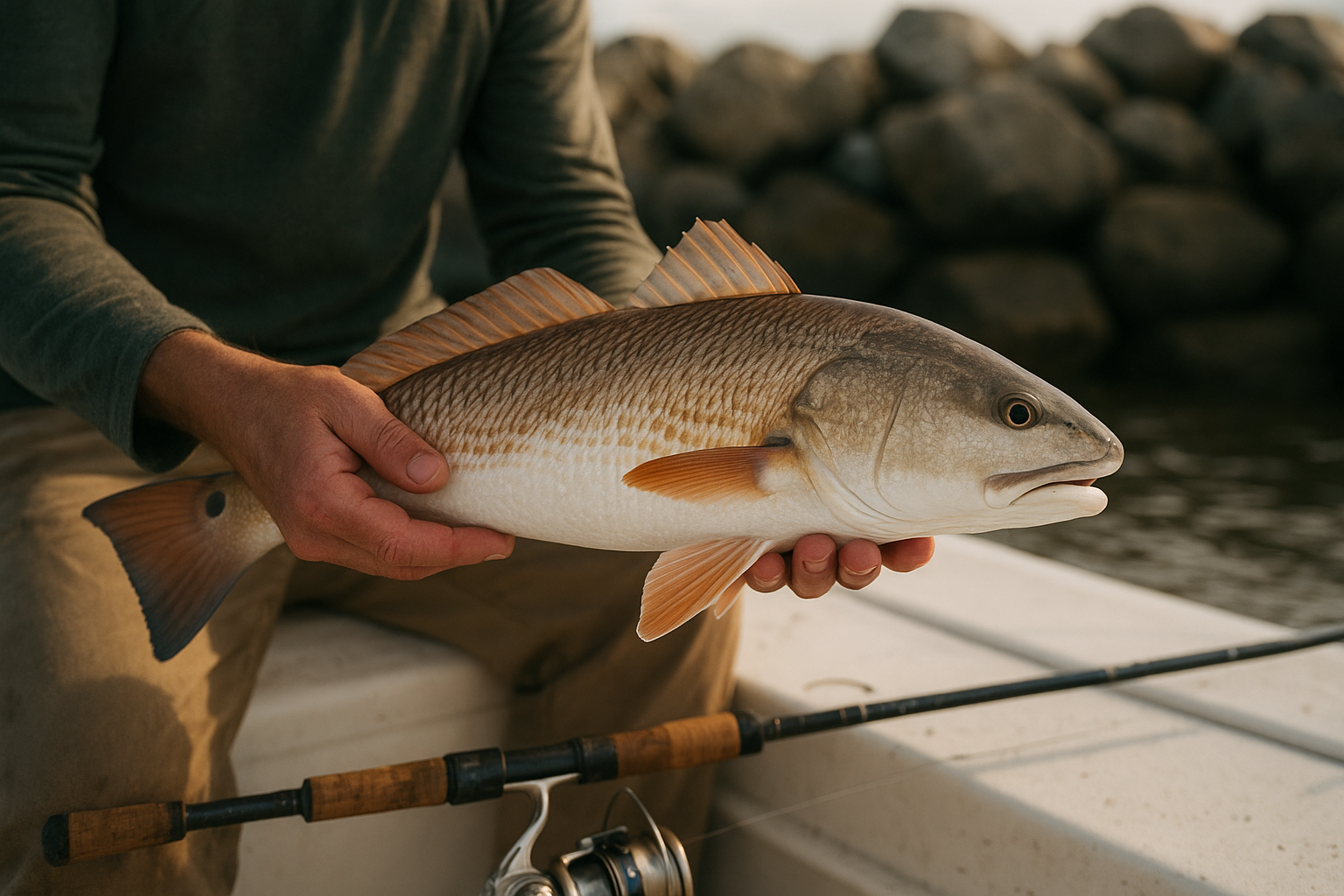
Red drum are one of the most reliable catches around jetty structure.
Best Species to Target at the Jetties
Several species show up consistently around Grand Strand jetty structure throughout the fishing calendar:
- Red drum – hold tight to rock edges, especially on moving tide.
- Sheepshead – feed on barnacles and crustaceans directly on the rocks.
- Black drum – often mixed in with sheepshead near the jetty base.
- Flounder – stage near sandy pockets just off the rock line.
- Spanish mackerel – appear along the outer jetty edge in warmer months.
- Whiting and bluefish – round out the mix during bait-heavy stretches of the year.
That said, catches are never guaranteed, since species availability shifts with water temperature, bait presence, and time of year. The South Carolina Department of Natural Resources tracks seasonal patterns for many of these species, and local captains use that data alongside firsthand experience to plan each trip.
When to Fish the Jetties: Tides, Seasons, and Conditions
Above all, tide stage matters more than time of day when fishing the jetties. Moving water, particularly the first and last two hours of an incoming or outgoing tide, pushes bait past the rocks and triggers feeding activity. Slack tide, by contrast, tends to slow the bite considerably, since less current simply means less concentrated food moving through the strike zone.
Checking a tide chart before you plan a trip is worth the extra minute; the NOAA Tides and Currents tool shows predicted tide times for inlets up and down the Grand Strand, so you can line up your charter with a moving tide instead of a dead one.
Seasonally, spring and fall generally bring the most consistent jetty action as fish migrate through the inlets. In addition, summer offers warm-water species like Spanish mackerel, while cooler winter months can still produce sheepshead and black drum near the rocks. However, wind direction and swell height matter just as much as season, since choppy conditions near a jetty can make boat positioning genuinely difficult. This is exactly why captains, not calendars, make the final call on whether a given day is suitable to fish the structure safely.
Jetty Fishing Techniques That Get Results
Generally speaking, bottom rigs baited with shrimp, crab, or cut bait work well for sheepshead and black drum holding tight to the rocks. For red drum, on the other hand, a live bait or cut bait suspended just off the bottom near a current seam tends to draw more strikes. Meanwhile, casting artificial lures along the outer edge can produce Spanish mackerel and other feeding fish during warmer stretches of the year.
Boat positioning matters just as much as bait choice. Specifically, holding the boat parallel to the rocks lets anglers work multiple depth zones without constantly repositioning, while anchoring too far off the structure often means missing the fish entirely. Guests interested in learning these techniques hands-on can explore our private fishing instruction options, or review related trolling techniques used on nearby nearshore trips.
Boating and Navigation Safety Near the Jetties
Fishing the jetties means operating a boat in some of the trickiest water along the coast, where current, shoaling sand, and other vessels converge in a tight space. For that reason, the U.S. Coast Guard’s boating safety resources recommend watching channel markers closely and respecting no-wake zones near inlet structure, since conditions can shift quickly as the tide turns.
On a private charter, your captain handles all of this directly, reading swell, current, and traffic in real time rather than relying on general rules alone. Consequently, beginners and experienced boaters alike can enjoy jetties fishing without needing to know the local hazards themselves beforehand.
How to Prepare for a Jetties Fishing Charter
Preparing for a jetty trip is straightforward, especially since the charter provides the core equipment. Follow these steps to get ready:
- Choose a trip type. Decide whether an inshore trip that includes jetty structure, or a dedicated nearshore trip, best fits your group’s experience level, goals, and preferred target species before you book.
- Check availability and book. Contact the charter directly or use the online booking system to check open dates, confirm the departure location, and reserve the boat exclusively for your party.
- Confirm departure details. Verify your assigned departure location, arrival time, and trip duration a day or two before the charter, so your group arrives prepared and right on schedule.
- Pack appropriately. Bring sun protection, non-slip shoes, and weather-suitable layers, since rods, reels, bait, tackle, and licenses are already provided by the charter for every guest.
Jetties Fishing vs. Inshore Fishing: What’s the Difference?
Jetties fishing focuses specifically on rock structure at an inlet, where ocean water mixes with estuary water and current speeds up considerably. Broader inshore fishing, in contrast, covers coastal creeks, marshes, and brackish waterways farther from the inlet mouth, where the water moves more slowly and species behavior differs quite a bit.
Both approaches are coastal techniques rather than freshwater fishing, and many trips actually combine the two, stopping at jetty structure before moving into calmer backwater areas. Anglers curious about the marsh and creek side of things can learn more through our inland fishing charters page, or compare notes on inshore fishing in Little River, SC, which explains how those trips differ from jetty-focused outings.
Common Mistakes Anglers Make When Jetty Fishing
One frequent mistake is fishing slack tide and then wondering why the bite is slow, when in reality the fish simply aren’t being pushed toward the structure at all. Another common issue is using tackle too light for the current, which makes it difficult to keep bait near the rocks where fish are actually holding. Similarly, positioning the boat too far from the jetty structure often means missing the strike zone entirely.
Safety mistakes matter too. Ignoring changing swell or wind conditions near a jetty can turn a promising trip risky, which is exactly why experienced captains monitor conditions closely and adjust plans as needed rather than pushing through unsafe water.
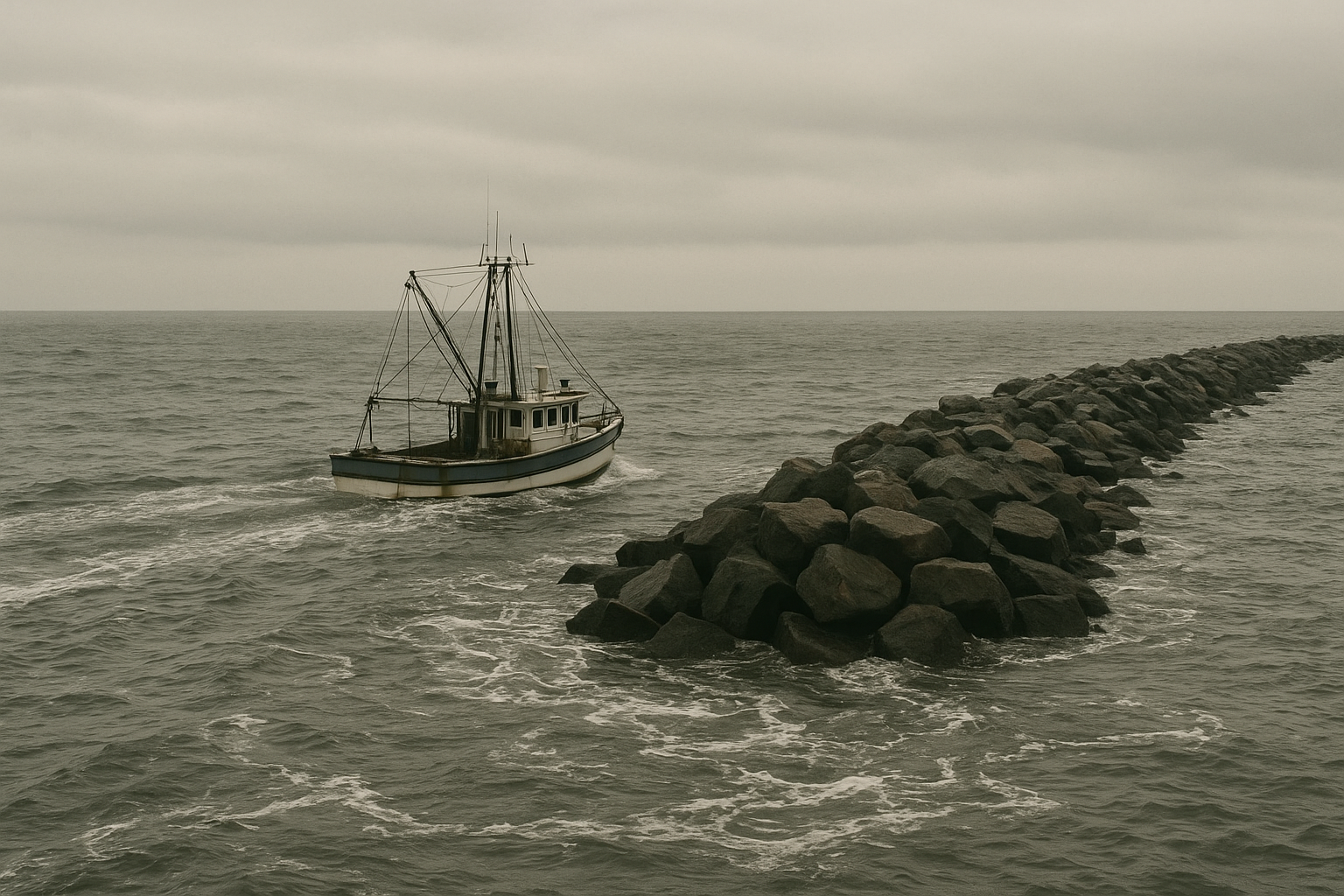
Careful boat positioning near moving current is key to productive jetty fishing.
Catch, Release, and Conservation at the Jetties
Because jetty structure concentrates fish so effectively, it also concentrates fishing pressure, which makes responsible handling genuinely important. Specifically, keeping a fish in the water as long as possible, using non-stainless circle hooks, and releasing undersized red drum or flounder quickly all help protect the structure’s long-term productivity. For a deeper look at proper technique, our guide to catch-and-release fishing near Myrtle Beach covers handling methods that keep released fish healthy and swimming strong.
Booking a Private Jetties Fishing Charter
Every trip with Low Country Fishing Charters is reserved exclusively for the booking party, whether that’s a family, a couple, or a group of friends looking to fish the jetties together. Our USCG-licensed local captains plan trips around seasonal patterns, tides, weather, and sea conditions, and rods, reels, bait, tackle, and required fishing licenses are included with every booking.
Beginners are always welcome, and captains provide practical, hands-on instruction throughout the trip. To see the kind of water and catches guests typically experience, take a look at our video gallery and photo gallery before checking availability for your preferred dates, or browse the Little River Fishing Fleet guide for departure details near North Myrtle Beach.
Frequently Asked Questions About Jetties Fishing
What is jetties fishing?
Jetties fishing is fishing along the rock structures built at inlets to stabilize channels, where strong tidal current concentrates baitfish and gamefish. Anglers fish from boats near the rocks to target species like red drum, sheepshead, and flounder that hold near the structure.
Where can I go jetties fishing near Myrtle Beach?
The Little River Inlet jetties near North Myrtle Beach are among the most fished structures along the Grand Strand. A private charter can also reach the Murrells Inlet jetties and other nearby inlet structure depending on conditions and the trip booked.
What’s the difference between the Murrells Inlet jetties and the Little River Inlet jetties?
Murrells Inlet is one of South Carolina’s few natural, non-dredged inlets and tends to run a narrower, faster channel, while Little River Inlet sees heavier tidal exchange tied to the Intracoastal Waterway. Both hold similar species, so the better choice usually comes down to tide timing and departure location rather than one spot being objectively better.
What fish can you catch at the jetties?
Common catches at Grand Strand jetties include red drum, sheepshead, black drum, flounder, and Spanish mackerel during warmer months. Species availability shifts with the season, tide, and water temperature, so no specific catch is ever guaranteed.
What is the best time of day for jetty fishing?
Moving tides, particularly the first and last two hours of the incoming or outgoing tide, generally produce the most consistent action at the jetties. Early morning and late afternoon light also tends to trigger more feeding activity near the rocks.
Do I need a boat for jetties fishing?
A boat is not strictly required, but it allows anglers to reach the deeper, faster-moving water on the ocean side of the rocks where larger fish often stage. A private charter boat also lets the captain reposition quickly as the tide changes.
Can you fish the jetties from shore instead of a boat?
Yes, shore access exists at some Grand Strand jetties, though it usually limits anglers to the inshore end of the structure where current and depth are weaker. Fishing from a boat gives access to the ocean-side rocks, where current and bigger fish both tend to concentrate.
Is jetty fishing good for beginners?
Yes, jetty fishing works well for beginners because the structure holds fish predictably and the techniques are straightforward. A guided trip adds practical instruction so first-time anglers understand bait presentation and how to work the current correctly.
What’s the difference between jetties fishing and inshore fishing?
Jetties fishing focuses on rock structure at inlets where ocean and estuary water mix, while broader inshore fishing covers creeks, marshes, and brackish waterways farther from the inlet. Both are coastal techniques, but they target different water types and often different species.
Do I need a fishing license for jetties fishing in South Carolina?
On a private charter, required fishing licenses are included as part of the trip, so guests don’t need to buy one separately. Anglers fishing independently from shore or their own boat should check current licensing rules through the South Carolina Department of Natural Resources before heading out.
How much does a private jetties fishing charter cost?
Pricing depends on trip length, group size, and the type of charter booked, since jetty structure can be worked into inshore or nearshore trips. Checking availability directly with Low Country Fishing Charters provides accurate current pricing for your preferred dates.
What gear do I need for jetty fishing?
On a private charter, rods, reels, bait, tackle, and required fishing licenses are included, so guests don’t need to bring their own equipment. Sturdy shoes, sun protection, and weather-appropriate clothing are still recommended.
What time of year is best for jetties fishing?
Spring and fall tend to bring the most consistent jetty action as fish move through the inlets, while summer offers warm-water species and winter can produce sheepshead and black drum. Conditions and captain judgment ultimately determine the best days to fish.
What mistakes should I avoid when fishing the jetties?
Fishing slack tide, using tackle too light for the current, and positioning too far from the actual rock structure are common mistakes. Ignoring changing sea conditions near the rocks can also turn an unproductive trip into an unsafe one.
Is jetty fishing safe?
Jetty fishing from a private charter boat is generally safe because the captain manages boat positioning relative to current, swells, and other vessels. Captains also make the final call on whether conditions are suitable to fish the jetties on a given day.
Final Thoughts on Jetties Fishing
In summary, jetties fishing remains one of the most reliable ways to put fish in the boat along the Grand Strand, thanks to the current, structure, and depth changes that concentrate species like red drum, sheepshead, and flounder into a predictable area. Whether you’re comparing Little River Inlet to the Murrells Inlet jetties, or simply planning your first trip, understanding tide stage, seasonal patterns, and boat positioning makes a meaningful difference in results.
Ultimately, the easiest way to experience productive jetties fishing near Myrtle Beach is with a captain who already knows the water. Visit Low Country Fishing Charters to check availability and book a private charter built around your group’s experience and goals.



