North Myrtle Beach inshore fishing charters put anglers directly into the tidal creeks, marshes, and brackish backwaters that make the Grand Strand coastline such a productive place to fish. Rather than running far offshore, these trips stay close to shore in sheltered water, which makes them a popular choice for families, beginners, and anyone who wants a calmer day on the water. In addition, a private booking means the boat belongs to your group alone, not a mix of strangers sharing a ticket.
Quick Answer
A North Myrtle Beach inshore fishing charter is a private trip through coastal creeks and marshes with a licensed captain, aimed at species like red drum, trout, and flounder. Gear, bait, and licenses are included, and trips are built around tides and the group’s experience level.
What Are North Myrtle Beach Inshore Fishing Charters?
North Myrtle Beach inshore fishing charters are private boat trips that focus on coastal creeks, marshes, and estuary waterways rather than the open ocean. An estuary is a partially enclosed body of water where fresh water from rivers mixes with saltwater tides, creating rich feeding grounds for fish. Consequently, these backwaters tend to hold consistent populations of species that thrive in shallow, brackish conditions.
Unlike nearshore or offshore trips, inshore charters generally run in calmer, protected water. As a result, they’re often shorter in duration and more comfortable for guests who are new to boating or prone to motion sickness. A USCG-licensed captain plans the route based on the day’s tide stage, recent weather, and what the group hopes to catch.
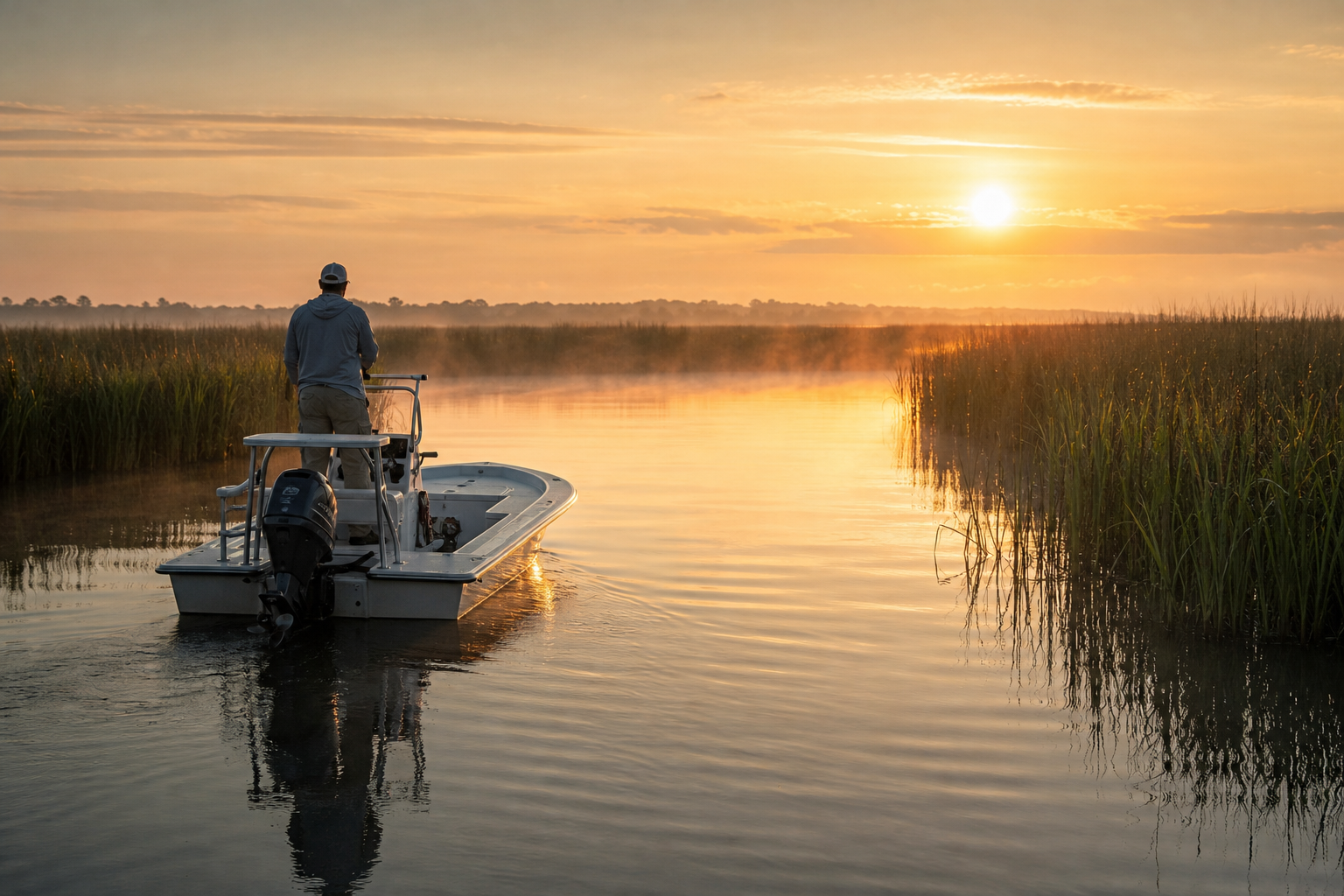
Calm marsh creeks like this are typical settings for North Myrtle Beach inshore fishing charters.
The Creeks, Marshes, and Backwaters Around North Myrtle Beach
Backwater fishing around North Myrtle Beach winds through a network of tidal creeks, grass flats, and oyster-lined banks that shift constantly with the tide. Specifically, these waterways connect to larger inlets near Little River and the broader Intracoastal Waterway, giving captains plenty of water to work with depending on conditions. In particular, oyster beds and grass edges tend to concentrate baitfish, which in turn draws predatory species looking for an easy meal.
Because this is coastal creek and marsh water, not freshwater lakes or mountain streams, the fishing here behaves differently than inland fishing elsewhere in the country. Salinity, tide flow, and structure all play a role in where fish hold at any given moment. For that reason, local knowledge of the Grand Strand’s backwaters matters just as much as the gear used on the boat.
Species You Can Target on an Inshore Trip
Several species regularly show up in Grand Strand creeks and marshes, though exact catches depend on season, water temperature, and tide. The table below summarizes common inshore targets and where they’re typically found.
| Species | Typical Habitat | Active Season |
|---|---|---|
| Red drum | Grass flats, oyster beds | Spring through fall |
| Spotted seatrout | Deeper creek bends | Fall through winter |
| Flounder | Sandy bottoms near structure | Summer through fall |
| Sheepshead | Docks, pilings, oyster rocks | Year-round, best in spring |
As the red drum example shows, many inshore species are closely tied to specific structure types, which is why captains often move between several spots in a single trip. Nevertheless, specific catches are never guaranteed, since fish behavior always depends on conditions that day.
How Tides and Seasons Shape Your Trip
Tides control how much water sits in a given creek at any moment, and that directly affects where fish feed. According to NOAA’s tide education resources, coastal tides along the U.S. Atlantic coast typically cycle through two high and two low tides roughly every 24 hours. Captains use this pattern to time trips so the boat reaches productive water during the right tide stage, rather than fishing against unfavorable conditions.
In the same way, seasonal shifts move fish between deeper channels and shallow flats as water temperature changes. For example, cooler months often push trout into deeper creek bends, while warmer months spread red drum across shallow grass flats. Therefore, a good captain adjusts both route and technique throughout the year instead of fishing the same spots regardless of season.
Who Inshore Charters Are Best For
Inshore fishing tends to suit a wide range of guests precisely because the water is calmer and the trips are shorter than offshore outings. Families with young children often prefer this option since there’s less boat motion and more opportunity to reel in fish quickly. Similarly, first-time anglers benefit from the practical, hands-on instruction captains provide throughout the trip.
On the other hand, experienced anglers sometimes choose inshore trips specifically to target technical species like redfish on light tackle, which requires more finesse than bottom fishing offshore. Groups of friends and corporate outings also work well here, since every trip is private and limited to the booking party. For a closer look at how this service compares with other trip types in the area, the Myrtle Beach inshore fishing charter overview covers additional booking details.
What’s Included on a Private Inshore Charter
Every private charter includes the essentials needed to fish comfortably for the day. Specifically, rods, reels, bait, tackle, and required fishing licenses come with the booking, so guests don’t need to arrive with their own gear. According to the South Carolina Department of Natural Resources, state fishing license requirements apply to recreational anglers, and charters that include licensing remove that step for guests.
Guests are generally asked to bring sun protection, water, snacks, and appropriate non-marking footwear. Because boat capacity, amenities, and departure point vary by the specific charter booked, it’s worth confirming those details directly when reserving a trip through Low Country Fishing Charters.
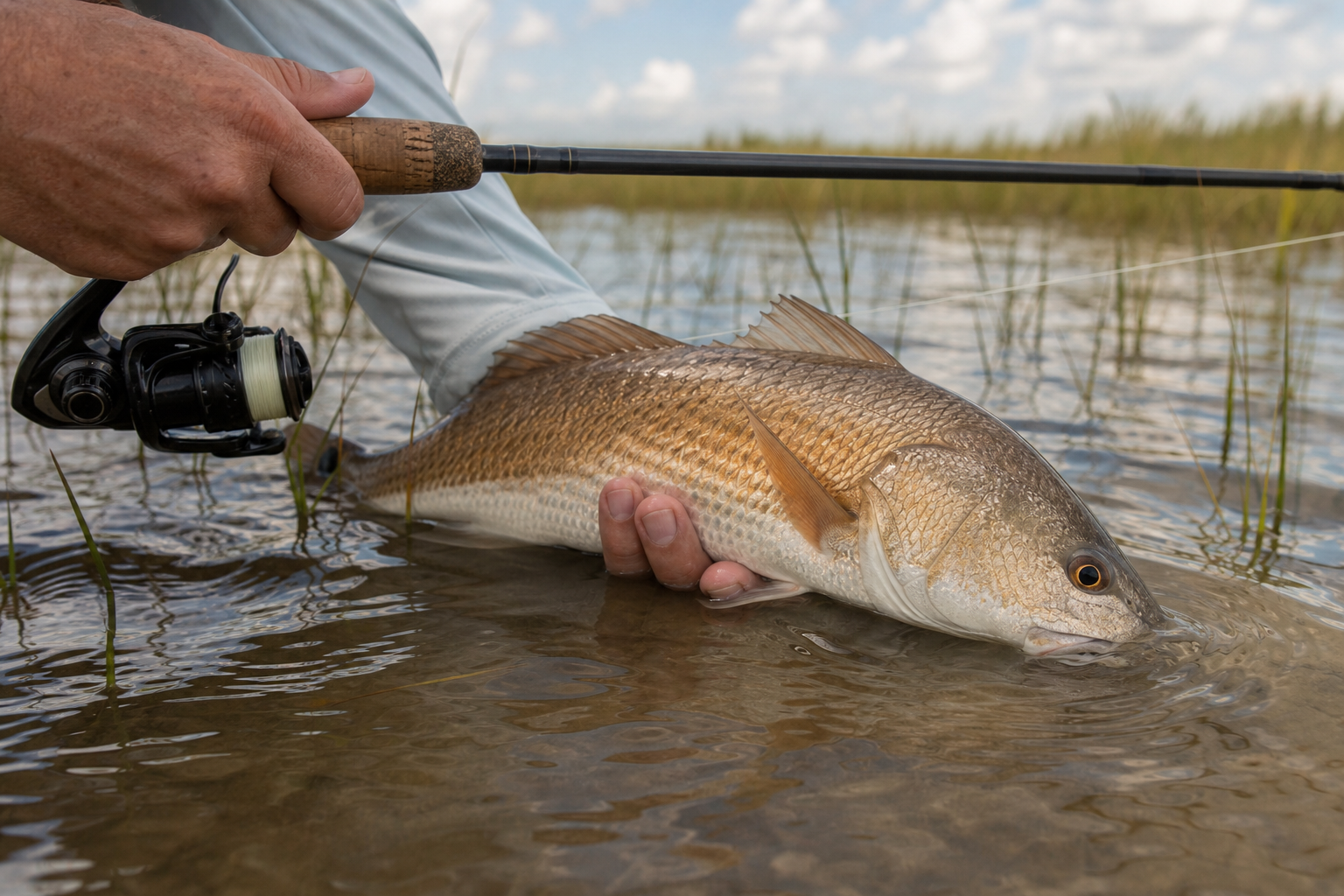
Responsible catch-and-release practices are part of a well-run inshore fishing trip.
How a North Myrtle Beach Inshore Charter Day Works
Understanding the general flow of a trip helps first-time guests know what to expect before they arrive at the dock.
- Confirm trip details. Guests confirm departure location, trip length, and group size with the captain ahead of time, since these affect which waterways are reachable that day.
- Arrive and get oriented. The captain reviews safety basics and explains the plan, helping new anglers get comfortable with the provided rods and tackle.
- Run to the first spot. The captain picks a starting location based on tide stage, recent patterns, and the group’s goals, often a sheltered creek or marsh edge.
- Fish multiple locations. As the tide shifts, the boat relocates to follow feeding fish, offering several different looks at structure throughout the charter.
- Wrap up and head back. Near the end, the captain times the return around the tide and schedule, with guidance on handling and releasing fish responsibly.
Inshore vs. Nearshore and Offshore Trips: Which Fits Your Group?
Choosing between inshore, nearshore, and offshore fishing largely comes down to how much ocean motion your group is comfortable with and which species interest you most. Inshore trips stay in protected creeks and marshes, while nearshore trips move into open water around reefs and wrecks closer to the coastline. Offshore and Gulf Stream trips, by contrast, travel much farther out to deeper water for larger pelagic species.
As a result, groups with young kids or seasickness concerns often start with inshore or backwater trips, while anglers chasing bigger game fish may prefer offshore or deep sea options. The inshore fishing experience guide breaks down what a typical day looks like in more detail, which can help when comparing trip types before booking.
Choosing Your Departure Point Along the Grand Strand
Charters operating in this region depart from several points along the Grand Strand, including locations near North Myrtle Beach, Little River, Murrells Inlet, and nearby communities. Because departure location affects travel time to specific creeks and inlets, it’s worth confirming the assigned dock when booking a trip. For guests specifically searching for options closer to the northern end of the Strand, the North Myrtle private trips booking page outlines available departure points and trip types in that area.
Ultimately, the right departure point depends on where your group is staying and which waterways the captain plans to fish that day. Weather and sea conditions also factor into final routing decisions, which captains make on the day of the trip for safety reasons.
Frequently Asked Questions
What are North Myrtle Beach inshore fishing charters?
North Myrtle Beach inshore fishing charters are private boat trips that fish tidal creeks, marshes, and brackish waterways close to shore rather than the open ocean. A USCG-licensed captain guides the trip based on tides, season, and the group’s experience level.
How long does an inshore fishing charter last?
Most inshore charters run between four and six hours, though shorter and longer options may be available. The right length depends on group goals, tide timing, and how far the captain needs to travel to productive water.
What fish can you catch inshore near North Myrtle Beach?
Common targets include red drum, spotted seatrout, flounder, and sheepshead, depending on the season and tide. Specific catches are never guaranteed since fish behavior shifts with weather and water conditions.
Is inshore fishing good for beginners and kids?
Yes, inshore trips are generally calmer and shorter than offshore trips, making them well suited to children and first-time anglers. Captains provide practical instruction so new anglers can participate comfortably.
What is included in a private inshore charter?
Rods, reels, bait, tackle, and required fishing licenses are included with a private charter booking. Guests typically just need to bring sun protection, snacks, and appropriate footwear.
How much does an inshore fishing charter cost?
Pricing varies by trip length, boat, and group size, so it is best to check current rates directly when booking. Inshore trips are generally priced lower than offshore or Gulf Stream charters because they cover less distance and use different gear.
Inshore fishing versus nearshore fishing: what is the difference?
Inshore fishing stays within creeks, marshes, and protected estuary waters, while nearshore fishing moves into the ocean around reefs and wrecks closer to the coastline. Nearshore trips typically involve larger boats and different target species than inshore outings.
Do tides affect inshore fishing trips?
Tides strongly influence where fish feed and how accessible certain creeks and flats are during a trip. Captains plan departure times around tide charts to put anglers on the most promising water.
What should I bring on a North Myrtle Beach inshore charter?
Sunscreen, polarized sunglasses, a hat, non-marking shoes, and water are the basics most captains recommend. Since rods, bait, and licenses are provided, guests do not need to bring their own fishing gear.
Can groups of friends or families book the same charter?
Yes, every charter is private and reserved only for the booking party, so families, couples, or groups of friends fish together without being paired with strangers. Boat capacity depends on the specific vessel selected.
What is a common mistake first-time charter guests make?
A common mistake is booking a trip length or type that does not match the group’s goals, such as choosing an offshore trip when calmer inshore water would suit seasick-prone guests better. Discussing group experience and preferences with the captain beforehand helps avoid this.
Do weather conditions cancel inshore trips often?
Inshore waterways are more sheltered than open ocean routes, so trips are less frequently affected by wind and swell. Captains still make the final call on operating based on safety and conditions on the day of the trip.
Where do North Myrtle Beach inshore charters depart from?
Departure points vary by the specific charter and can include locations around North Myrtle Beach, Little River, and nearby Grand Strand waterways. Guests should confirm their assigned departure location when booking.
What is the best season for inshore fishing in this area?
Spring and fall are often considered strong seasons for species like red drum and spotted seatrout in Grand Strand waterways, though fishing continues year-round depending on conditions. Captains adjust trip planning seasonally to match active fish behavior.
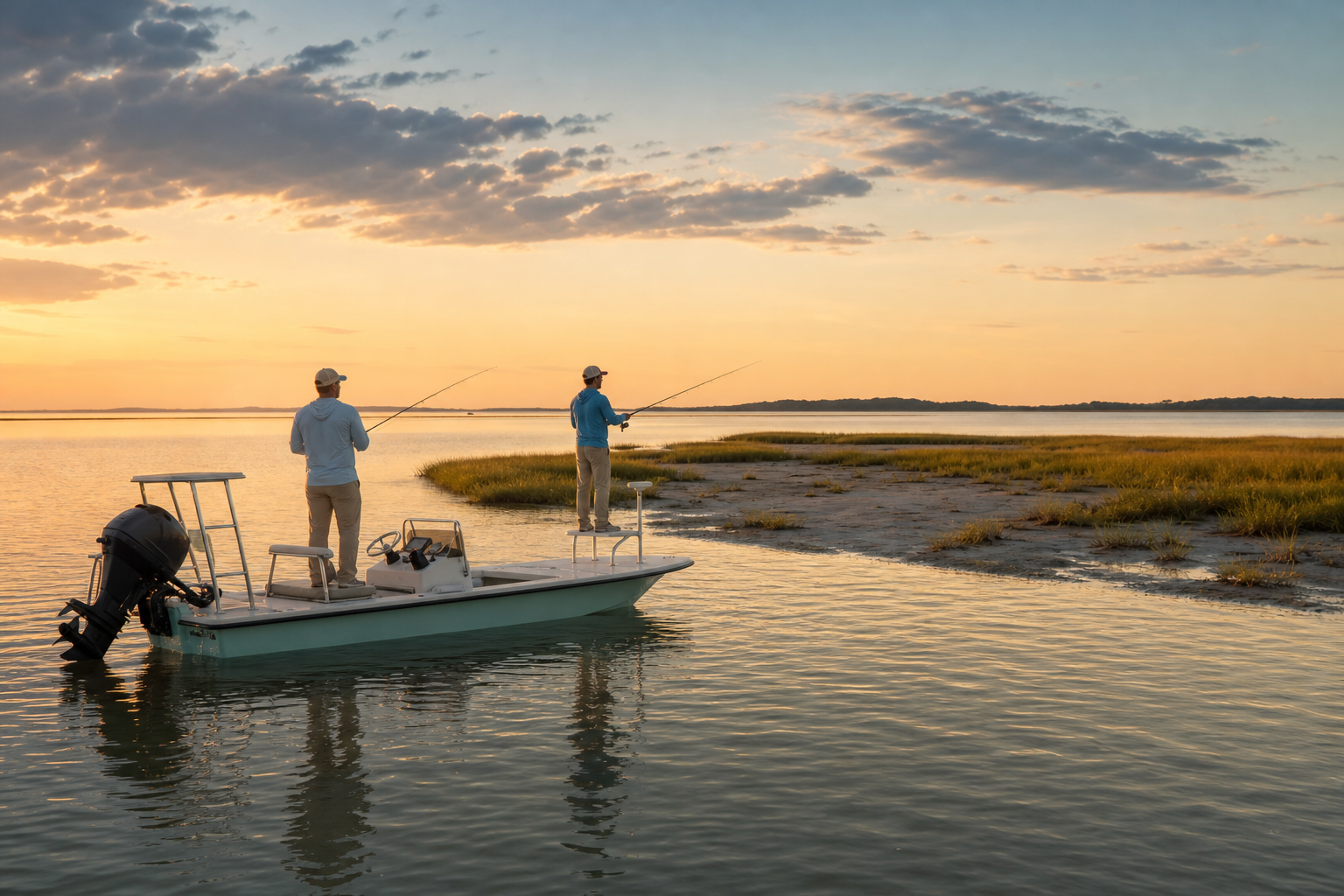
Grass flats like this one hold fish throughout the warmer months on inshore trips.
Final Thoughts
In the end, North Myrtle Beach inshore fishing charters offer an accessible, scenic way to fish the Grand Strand’s creeks and marshes without venturing far from shore. Because every trip is private and built around tides, season, and group goals, both beginners and seasoned anglers tend to find the experience rewarding. Above all, working with a licensed local captain means the gear, licensing, and route planning are handled, leaving guests free to focus on fishing. Whether you’re after redfish on a grass flat or simply want a relaxed day on calm water, checking current availability and booking directly is the most reliable way to plan a North Myrtle Beach inshore fishing charter that fits your group.



