Shark fishing South Carolina trips put anglers face to face with some of the hardest-fighting fish in the Atlantic, right off the beaches of the Grand Strand. From the creek mouths and nearshore reefs of Myrtle Beach to the deep blue edge of the Gulf Stream, these waters hold a genuine mix of species and structure that few coastlines can match. In addition, private charters make the experience approachable whether you’ve never held a rod or you’ve chased marlin offshore for years.
Above all, knowing where sharks move, when they feed most aggressively, and what a trip actually involves helps you plan with confidence instead of guesswork. Therefore, this guide walks through seasons, species, locations, tackle, pricing, safety regulations, and the exact steps to book — everything you need to plan a shark fishing South Carolina trip along the coast, start to finish.
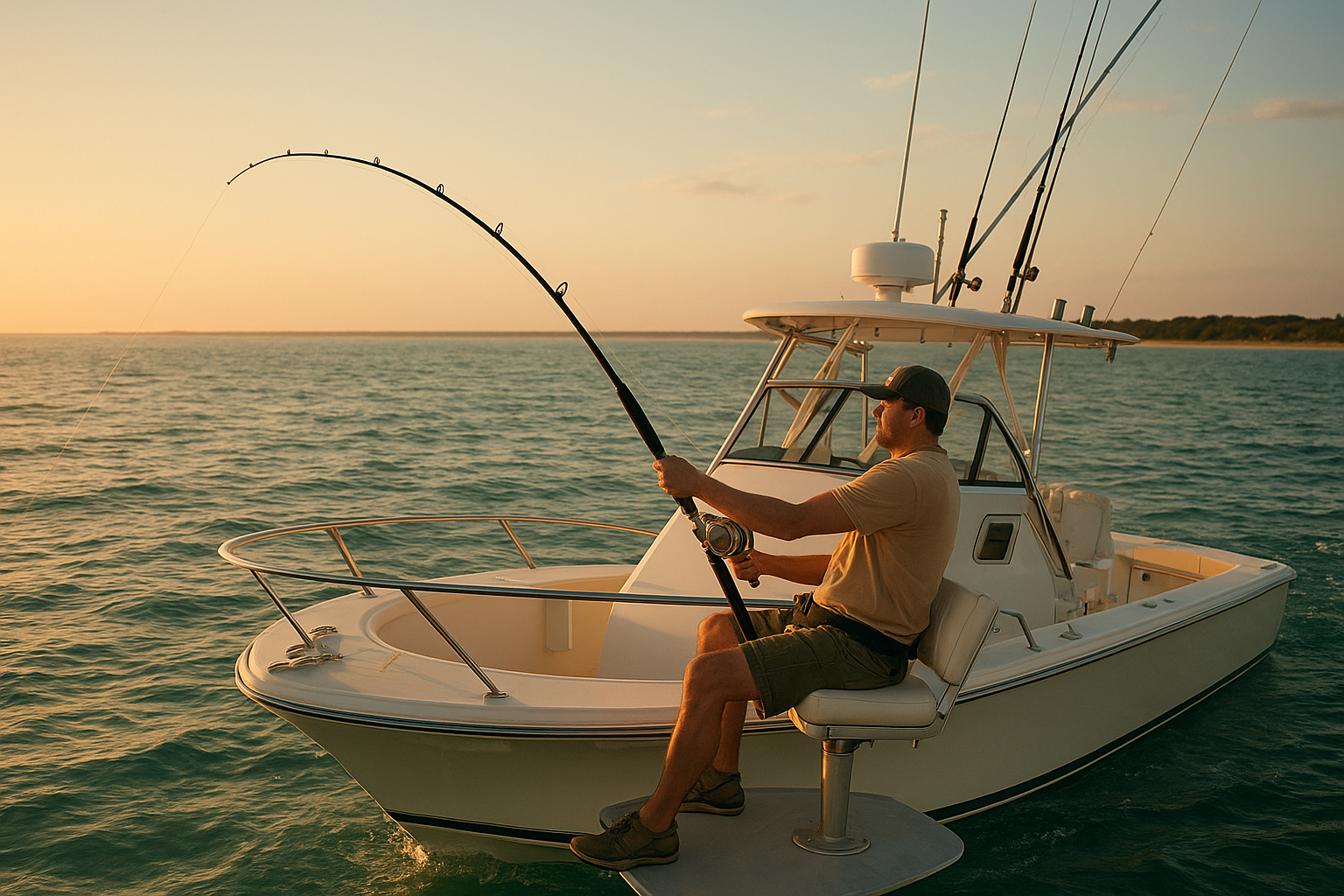
A private charter heads offshore for a shark fishing South Carolina trip along the Grand Strand.
What Is Shark Fishing in South Carolina?
Shark fishing in South Carolina means deliberately targeting shark species — not just hoping one bites while you’re after redfish — using heavy tackle, circle hooks, and bait chosen to match the season and location. Trips range from short nearshore outings a few hundred yards off the beach to longer runs toward deep structure far offshore.
Unlike casting a light spinning rod at trout in the marsh, shark fishing calls for sturdier rods, braided or heavy monofilament line, and wire or heavy fluorocarbon leaders capable of surviving abrasive skin and sharp teeth. As a result, charters that specialize in this style carry gear purpose-built for larger, harder-fighting fish rather than repurposed inshore tackle. Furthermore, experienced captains pick a spot based on bait activity, water clarity, and tidal movement that day — not a single fixed location marked on a chart.
Gear and Tackle Used on South Carolina Shark Charters
Most South Carolina shark charters run conventional reels spooled with 50- to 80-pound braided line, paired with heavy-action rods designed to absorb long, powerful runs. In particular, leaders typically combine a length of wire or heavy monofilament with a non-offset circle hook — a hook shape engineered to catch in the corner of a shark’s jaw rather than deep in the throat, which dramatically improves survival after release. Bait selection matters just as much as tackle: menhaden, mullet, and cut bonito are common choices because their oil content draws sharks in from a distance on scent alone. Consequently, a well-run trip blends the right rod, the right leader, and the right bait rather than relying on brute strength alone.
Best Season for Shark Fishing South Carolina Waters
The strongest shark fishing South Carolina activity generally runs from late spring through early fall, when warming water pulls baitfish — and the sharks that follow them — closer to shore. Therefore, most captains consider May through September the most dependable stretch, though conditions still shift week to week depending on water temperature and bait movement.
Month-by-Month Shark Activity Along the Grand Strand
- April–May: Warming nearshore water triggers the first wave of activity around piers, inlets, and reef structure as bait schools return.
- June–August: Peak season. Bait concentrates close to the coast, and blacktip, spinner, and bonnethead sharks feed aggressively in nearshore waters.
- September–October: Activity stays strong, and cooling water often pushes larger species, including bull sharks, closer to structure.
- November–March: Fish can still be caught, but trips usually need to range farther offshore toward the Gulf Stream to find comparable action.
In every case, weather and sea conditions make the final call. Captains monitor wind, swell, and storm activity closely, and they will reschedule a trip rather than risk running an unsafe route — a precaution worth knowing before you plan a vacation around a single date.
Where to Go Shark Fishing Near Myrtle Beach
Several distinct areas along the Grand Strand support shark fishing, and each serves a different style of trip. For example, nearshore reefs and wrecks just a few miles off Myrtle Beach and North Myrtle Beach often hold bait and structure that pull sharks within a short run from the dock.
Nearshore Reefs, Wrecks, and Inlets
Communities including Little River, Murrells Inlet, Surfside Beach, Garden City, and Pawleys Island each offer convenient access points along the coast, and the inlets near these towns often hold concentrated bait that attracts sharks throughout the warmer months. You can learn more about how local conditions differ from neighboring waters in this comparison of offshore fishing conditions in North Carolina versus South Carolina. Guests should always confirm their assigned departure location when booking, since it can vary by charter and trip type.
Offshore Grounds and the Gulf Stream
Further out, offshore grounds and the edge of the Gulf Stream — a powerful warm-water current roughly 40 to 50 miles off the South Carolina coast — open up access to different species and generally larger specimens. However, reaching these waters requires a longer run and favorable sea conditions, so captains plan routes carefully around the day’s forecast rather than pushing through marginal weather.
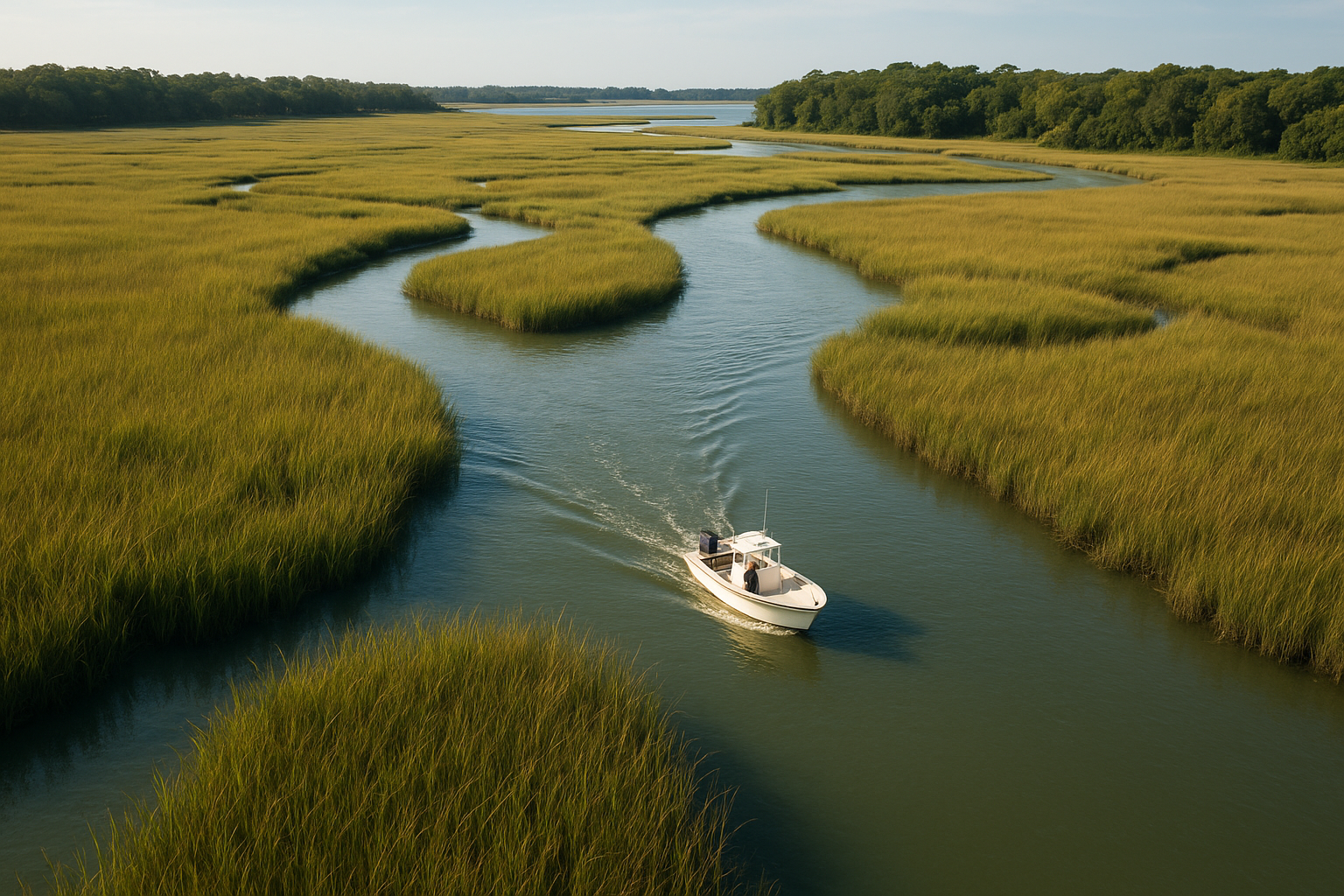
Inlets and nearshore structure along the Grand Strand often hold bait that attracts sharks.
Shark Species You Might Encounter Along the Grand Strand
Catches can never be guaranteed, but anglers fishing South Carolina’s coastal and offshore waters commonly encounter several recognizable species, and each behaves a little differently depending on water depth and temperature.
Blacktip, Spinner, and Bonnethead Sharks
Blacktip and spinner sharks are frequent visitors to nearshore waters during warmer months, and they often put up acrobatic, surface-jumping fights that make for great photos. In contrast, bonnethead sharks — a small relative of the hammerhead — tend to stick closer to shallow, structure-rich areas and suit lighter tackle, making them a great option for beginners and kids.
Bull, Hammerhead, and Tiger Sharks
Meanwhile, trips that venture toward deeper offshore grounds may encounter bull sharks, hammerheads, and — depending on the season and conditions — tiger sharks, one of the largest and most sought-after species along this coast. If a tiger shark is your target species, this dedicated tiger shark fishing charter guide for South Carolina breaks down the specific tactics, seasons, and boat setup used to target them. According to NOAA Fisheries, numerous shark species inhabit Atlantic waters off the Southeast U.S. coast, and regulations under the agency’s Highly Migratory Species (HMS) program — a federal framework governing far-ranging ocean fish — determine which species may be retained and which must be released. Because species and behavior shift throughout the year, experienced captains adjust tactics, bait, and location rather than relying on one fixed approach.
Nearshore vs. Offshore vs. Gulf Stream Shark Trips: Which Fits You?
Choosing the right trip type matters just as much as choosing the right season. Specifically, each option trades travel time for a different mix of species, boat ride, and overall experience.
- Nearshore shark trips: A short run to reefs, inlets, and structure close to the beach. Ideal for beginners, families, and shorter time windows, with frequent action from blacktip, spinner, and bonnethead sharks.
- Offshore shark trips: A longer run to deeper structure past the nearshore zone, often producing larger bull sharks and hammerheads along with everything found closer in.
- Gulf Stream shark trips: The longest run, reaching the warm current roughly 40–50 miles out, where bigger specimens and a wider variety of pelagic species are possible. This option suits experienced anglers comfortable with a full-day commitment.
Your captain will usually recommend a trip type once you’ve discussed group size, experience level, and how much time you have on the water — so there’s no need to decide blindly before booking.
What to Expect: A Typical South Carolina Shark Fishing Trip
Knowing the rough shape of the day removes a lot of first-trip anxiety. In general, a private shark trip follows a similar rhythm regardless of whether you booked a nearshore or offshore charter.
- Dock check-in and safety briefing: Your captain covers rod handling, leader work, and what to do once a shark is hooked.
- The run to the fishing grounds: Depending on trip type, this takes anywhere from 15 minutes for nearshore spots to over an hour for Gulf Stream trips.
- Chumming and bait deployment: The crew sets lines and often introduces scent into the water to draw sharks toward the boat.
- The fight: Once a shark takes the bait, anglers rotate into the fighting chair or stand-up harness under the captain’s direction.
- Measurement, photos, and release: Most sharks are brought boatside, measured, photographed, and released promptly and safely.
How to Book a Private Shark Fishing Charter in South Carolina
Booking a private trip is straightforward once you know what to consider. The following steps outline a typical process for reserving a shark fishing South Carolina charter along the Grand Strand.
- Decide on a trip type. Consider whether a nearshore, offshore, or Gulf Stream shark trip fits your group’s experience level, available time, and the species you most want to target.
- Check availability and departure location. Review open dates and confirm the assigned departure point, since locations can vary by charter, season, and trip type chosen.
- Discuss goals with your captain. Share your group size, experience level, and species interest so the trip can be planned carefully around tides, weather, and seasonal patterns.
- Complete your private reservation. Finalize the booking online or by phone, with rods, reels, bait, tackle, and required fishing licenses already included in the price.
For a closer look at what a shark trip involves day to day, this guide to shark fishing in Myrtle Beach walks through typical equipment and techniques used on local charters. You can also browse the full range of options on the South Carolina fishing charters page if you’d like to compare shark trips against other charter styles before deciding.
What’s Included and What to Bring
Pricing for a private shark charter depends on trip type, boat, duration, and group size, so costs vary between a short nearshore run and a full-day Gulf Stream trip. That said, reputable charters build the essentials into the price so you aren’t caught off guard at the dock.
- Typically included: Rods, reels, terminal tackle, bait, required fishing licenses, and hands-on captain instruction.
- What to bring yourself: Sunscreen, weather-appropriate clothing, drinking water, snacks, non-slip shoes, and a camera for catch photos.
Consequently, contacting the charter directly or checking online availability gives you the most accurate quote for your exact dates, group size, and preferred trip type.
Safety and Responsible Shark Fishing Practices
Safety matters above all when heavy tackle and powerful fish are involved. USCG-licensed captains lead every trip, providing hands-on instruction on rod handling, leader work, and safe release before anyone sets a line in the water.
South Carolina Shark Fishing Regulations You Should Know
In addition, South Carolina regulations require non-offset circle hooks for certain shark fishing applications — a rule designed to reduce injury and improve survival rates for released fish — according to South Carolina Department of Natural Resources guidance. Several shark species are also protected from harvest entirely under federal Highly Migratory Species rules, so a knowledgeable captain knows which fish must be released on sight regardless of size. Consequently, responsible practices like prompt handling, proper tools, and quick releases help support healthy shark populations along the entire coast.
Weather remains the final deciding factor on any given day. Captains assess wind, swell, and storm risk before departure, and trips may be adjusted or rescheduled to keep guests safe on the water.
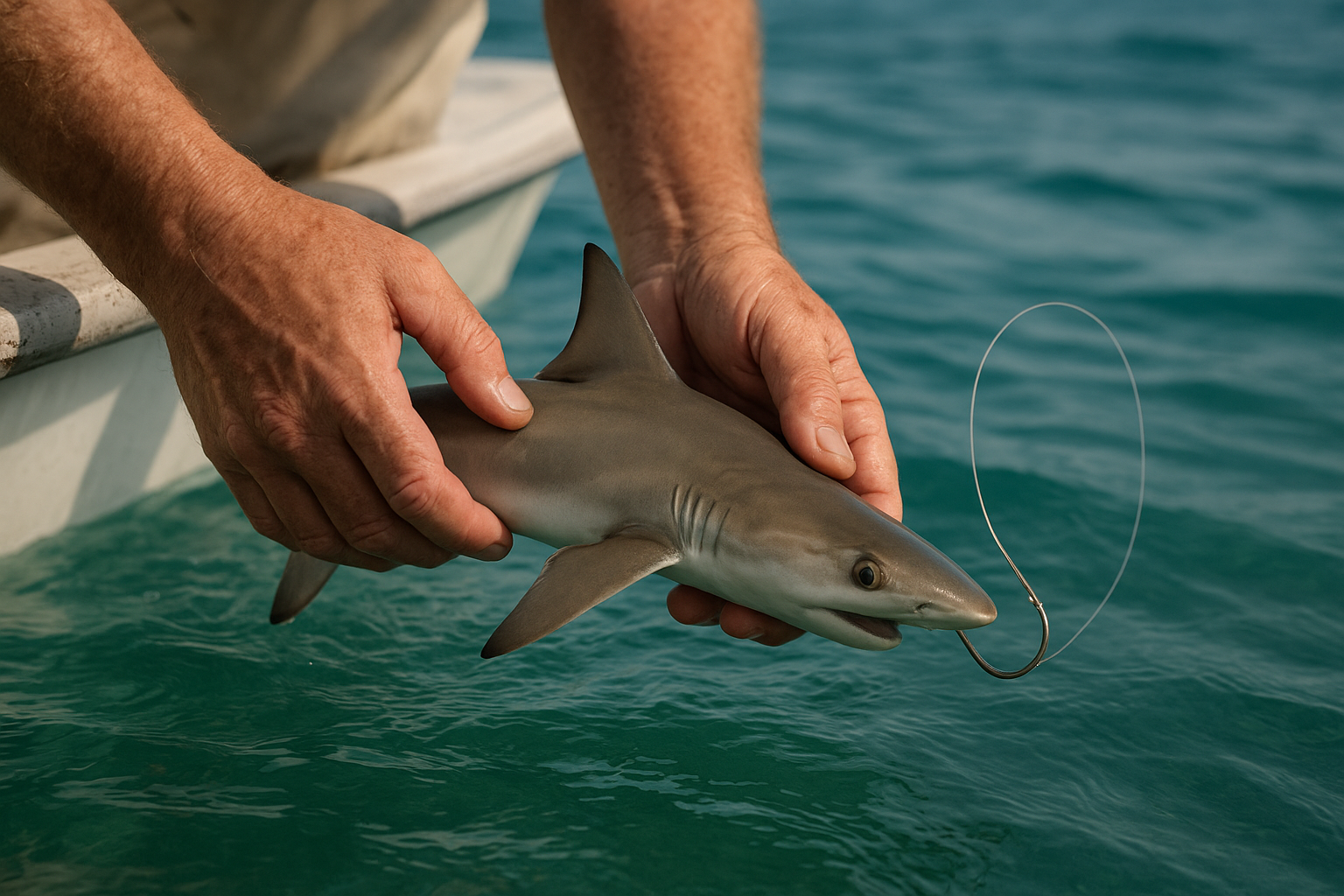
Responsible catch-and-release practices support healthy shark populations along the coast.
Choosing the Right Private Charter for Your Group
Because every group has different goals, a private charter lets families, couples, and groups of friends shape the trip around their own pace rather than sharing a boat with strangers. For example, Low Country Fishing Charters reserves each trip exclusively for the booking party and helps guests choose between nearshore, offshore, or Gulf Stream shark fishing based on experience and interest.
You can review real trip accounts in this account of a Myrtle Beach shark fishing charter experience, which describes what a typical day on the water can look like. Similarly, visiting the Low Country Fishing Charters homepage lets you check current availability and trip options before booking.
Frequently Asked Questions About Shark Fishing South Carolina
What is shark fishing in South Carolina?
Shark fishing in South Carolina is the practice of targeting shark species from nearshore and offshore waters along the Grand Strand using heavy tackle, circle hooks, and bait suited to local conditions. Trips range from short nearshore outings to longer offshore excursions depending on the species sought.
When is the best time for shark fishing South Carolina trips?
Warmer months, generally from late spring through early fall, tend to bring more consistent shark activity closer to shore. However, captains adjust trip timing based on water temperature, bait presence, and current conditions each week.
Do I need a fishing license to go shark fishing near Myrtle Beach?
No, guests booking a private charter with Low Country Fishing Charters do not need to buy a separate license. Required fishing licenses are included with every booked trip.
Do I need a Highly Migratory Species (HMS) permit to shark fish in South Carolina?
Recreational anglers fishing aboard a licensed charter generally fish under the boat’s own permits and licensing, so guests typically don’t need a separate HMS permit of their own. Your captain handles the applicable federal and state paperwork required to target sharks legally.
What shark species can I expect to catch?
Species vary by season, location, and conditions, so no particular catch can be guaranteed. Anglers may encounter blacktip, spinner, bonnethead, bull, hammerhead, or tiger sharks common to Southeast Atlantic waters.
Can I keep and eat a shark I catch in South Carolina?
Some species may be legally retained within strict size and bag limits, while many others must be released regardless of size under federal and state rules. Most charters practice catch-and-release by default to protect shark populations and simplify compliance for guests.
How long does a shark fishing charter usually last?
Trip length depends on the charter booked, with nearshore shark trips often running a few hours and offshore or Gulf Stream options lasting a full day. Your captain will discuss timing options when you check availability.
Is shark fishing safe for beginners and kids?
Yes, licensed captains provide practical instruction on handling, equipment, and safety before lines go in the water. Trips are private, so the pace can be adjusted for first-time anglers and younger participants.
What is the minimum age for a shark fishing charter?
There’s no universal minimum age, since private charters can tailor the pace and tackle for younger anglers. That said, parents should mention children’s ages when booking so the captain can plan an appropriately comfortable, safe trip.
How much does a private shark fishing charter cost?
Pricing depends on trip type, boat, duration, and group size, so costs vary between nearshore and offshore shark trips. Contacting the charter directly or checking online availability provides the most accurate quote for your dates.
What is the difference between nearshore and offshore shark fishing?
Nearshore shark fishing targets waters closer to the coast around structure and bait schools, while offshore trips travel farther out, sometimes toward the Gulf Stream, for different species and conditions. Your captain recommends the right option based on your goals and experience.
What is the best bait for shark fishing in South Carolina?
Oily baitfish like menhaden, mullet, and cut bonito tend to work best because their scent trail travels far through the water column. Captains often adjust bait choice based on which species is most active that day.
Are sharks released after being caught?
Many sharks are measured, photographed, and released promptly to support healthy populations. South Carolina regulations also require specific gear, such as non-offset circle hooks, to reduce harm to released fish.
What should I bring on a shark fishing trip?
Guests typically bring sunscreen, weather-appropriate clothing, water, and snacks, since rods, reels, bait, and tackle are already provided. Non-slip shoes and a camera for catch photos are also good additions.
What is a common mistake first-time shark anglers make?
A common mistake is underestimating how much patience and proper technique shark fishing requires compared to typical inshore fishing. Rushing the fight or mishandling the leader can result in lost fish or safety issues, which is why captain guidance matters.
Can groups and families book a shark fishing charter together?
Yes, every charter is reserved exclusively for the booking party, so families, couples, and groups of friends can fish together privately. Boat capacity and amenities vary by the specific charter selected.
Does weather affect shark fishing South Carolina trips?
Yes, wind, swell, and storm activity directly influence whether a trip runs as planned. Captains make final weather-related decisions to keep guests safe, and trips may be rescheduled when conditions are unsuitable.
Final Thoughts on Shark Fishing South Carolina
Ultimately, shark fishing South Carolina trips reward anglers who plan around the season, choose the right trip type, and fish with experienced local captains. Whether you’re drawn to nearshore action near Myrtle Beach, a run toward bull sharks and hammerheads offshore, or a full-day push to the Gulf Stream, understanding seasonal patterns, species, gear, and safety practices helps set realistic expectations before you ever leave the dock.
In short, a private charter removes much of the guesswork by pairing you with a USCG-licensed captain who handles gear, planning, licensing, and on-water instruction. For more detail on what to expect, this shark fishing charter experience guide offers additional insight. For deeper background on shark biology and conservation, resources like Wikipedia’s overview of sharks and the NOAA Fisheries shark species page provide helpful context. When you’re ready to plan your own shark fishing South Carolina trip, checking availability and booking directly with a private charter is the most reliable next step.


