Sport fishing Myrtle Beach trips give anglers of every skill level a chance to explore coastal creeks, nearshore reefs, and deep offshore water along South Carolina’s Grand Strand. Whether you are planning a relaxed inshore outing with kids or an all-day Gulf Stream run, understanding how trip types differ makes it much easier to pick the right charter. This guide walks through seasons, species, costs, and planning steps so you can book with confidence.
Quick answer: Sport fishing Myrtle Beach is the general term for private saltwater fishing trips along the Grand Strand, covering inshore creeks, nearshore reefs, and offshore or Gulf Stream waters. The right trip depends on your group’s experience, target species, and how far offshore you want to travel.
What Is Sport Fishing in Myrtle Beach?
Sport fishing Myrtle Beach is a broad category that covers recreational saltwater fishing trips operated by licensed captains throughout the Grand Strand. These trips range from calm, protected creeks a few minutes from the dock to ocean water more than an hour offshore. Because conditions and target species change by location, most charters group trips into distinct categories rather than offering one standard outing.
In addition, trips are typically private, meaning the boat is reserved only for your group rather than shared with strangers. As a result, captains can tailor the pace, instruction level, and itinerary to the people actually on board. This flexibility is one reason sport fishing appeals equally to first-time anglers and seasoned offshore fishermen.
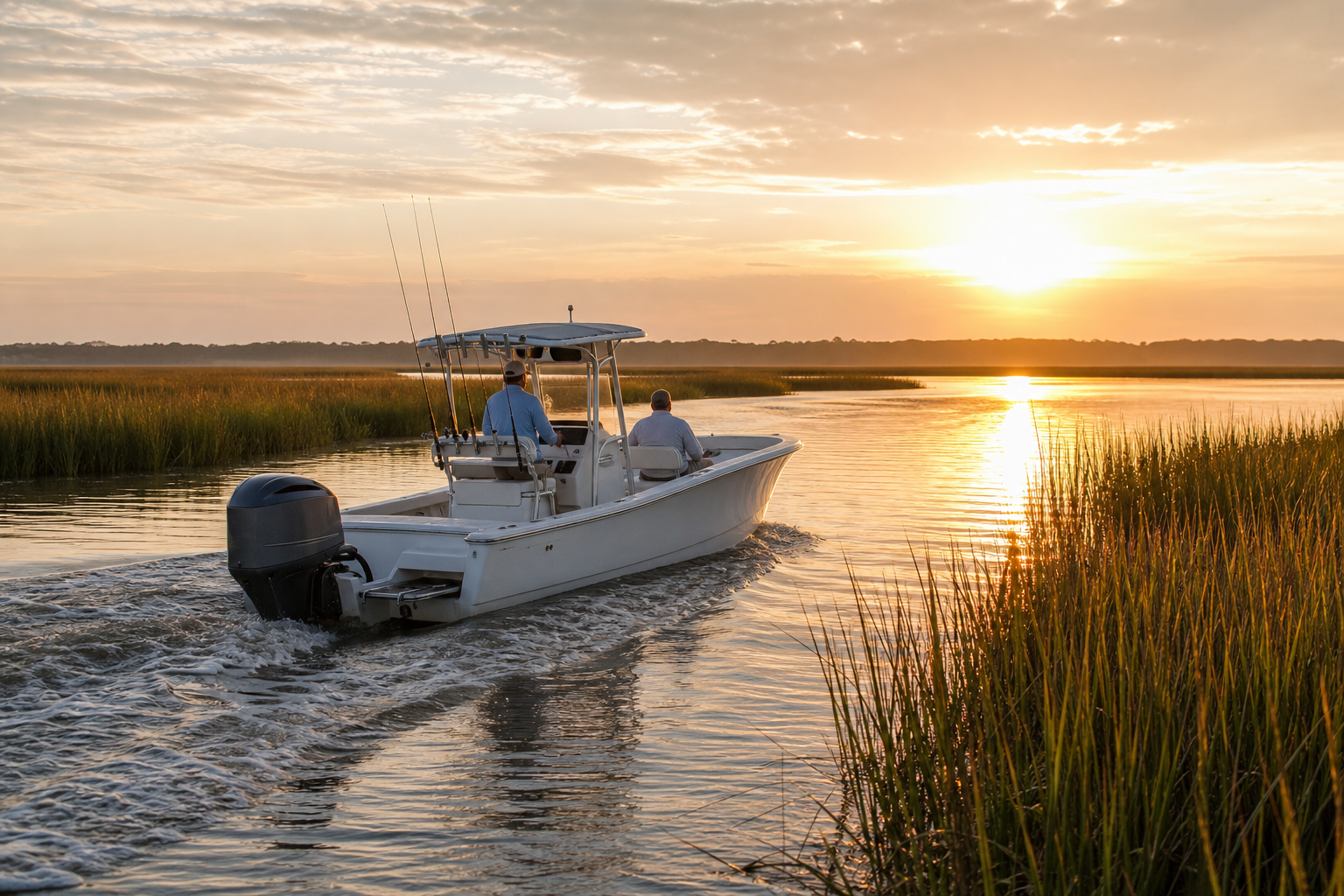
Inshore creeks offer calmer water, a common starting point for sport fishing Myrtle Beach trips.
Comparing Myrtle Beach Fishing Trip Types
Because the Grand Strand offers such varied water, from brackish marsh to the edge of the continental shelf, trip types differ significantly in distance, target species, and skill demands. Specifically, inshore and backwater trips stay close to protected waterways, while offshore and Gulf Stream trips travel much farther into open ocean. The table below summarizes the main differences.
| Trip Type | Typical Waters | Good For |
|---|---|---|
| Inshore / Backwater | Creeks, marshes, brackish water | Families, beginners, kids |
| Nearshore | Coastal reefs, wrecks | First ocean trip, moderate experience |
| Offshore / Deep Sea | Deeper ocean grounds | Experienced anglers, bigger species |
| Gulf Stream | Distant warm-water current | Full-day trips, pelagic species |
| Shark Fishing | Varies by target species | Thrill-seekers, catch-and-release interest |
For groups weighing catch-and-release practices on any of these trip types, the guide on catch-and-release fishing in Myrtle Beach explains how responsible handling fits into a private charter.
Seasonal Patterns for Myrtle Beach Saltwater Fishing
Seasonal timing matters a great deal for sport fishing Myrtle Beach trips, because water temperature and migration patterns shift which species are active near the coast. According to the National Oceanic and Atmospheric Administration, coastal water temperatures along the South Atlantic Bight change enough between seasons to drive significant fish movement (NOAA). Consequently, captains plan trips around tides, weather, and these seasonal shifts rather than a fixed calendar.
In spring, warming water often brings active inshore fishing along with the start of stronger nearshore opportunities. Summer typically offers the most consistent offshore and Gulf Stream conditions, though afternoon storms can affect scheduling. Fall brings another active migration window, similar to spring, while winter tends to favor calmer inshore and backwater trips in protected water.
Because conditions can change quickly, however, no specific catch or sighting is ever guaranteed on any trip. Captains adjust plans in real time based on tides, wind, and water clarity on the day of the charter.
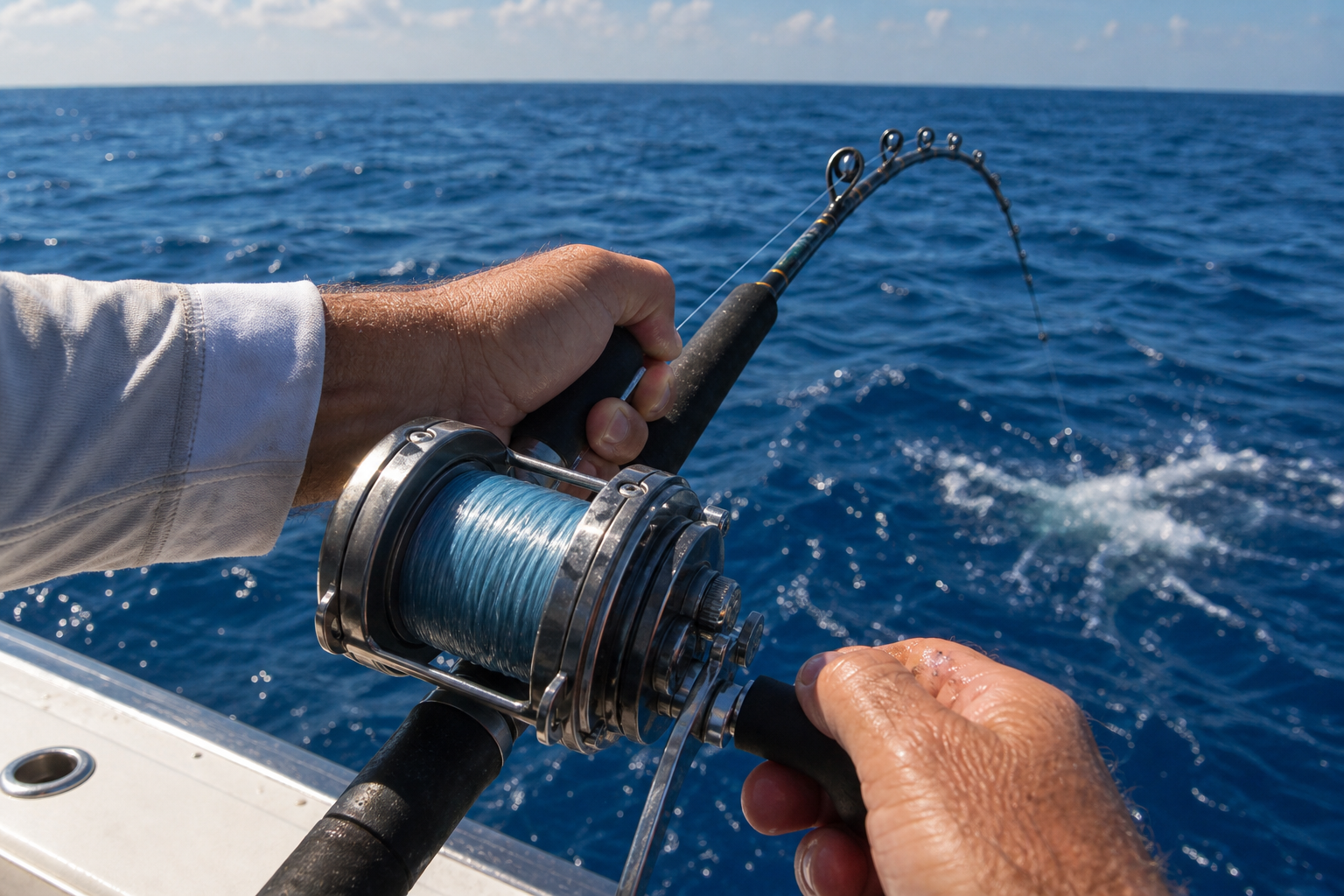
Offshore and Gulf Stream trips extend the reach of sport fishing beyond nearshore waters.
Target Species by Trip Type
Species availability shifts with location, which is why trip type matters so much when planning. Inshore and backwater trips in the Grand Strand’s creeks and marshes commonly focus on redfish, flounder, and spotted sea trout. These species tend to favor shallow, brackish water, making them well suited to calmer boats and simpler tackle setups.
Nearshore trips around reefs and wrecks open up possibilities for species such as sheepshead and various bottom fish, along with occasional migratory visitors. Offshore and deep sea trips reach farther into open water, where king mackerel, mahi-mahi, and bottom species become realistic targets. Gulf Stream trips go even farther, chasing pelagic species that favor the warm, fast-moving current.
Shark fishing trips are handled somewhat differently, with captains providing specific guidance on equipment, handling, and responsible release practices. In every case, specific catches are never guaranteed, since fish behavior depends on conditions that shift from day to day.
How to Choose the Right Sport Fishing Charter
Choosing among the available trip types does not have to be complicated. The following steps outline a practical process many guests use when deciding which charter to book.
- Assess group experience. Consider whether your group includes children, beginners, or experienced anglers, since this determines whether calmer inshore water or more challenging offshore water is the better starting point.
- Decide on target species and trip style. Think about whether you want to pursue inshore species like redfish and flounder or offshore species like mahi-mahi and king mackerel, since this choice narrows down which trip type fits best.
- Check seasonal timing and conditions. Review seasonal fishing patterns and expected weather for your travel dates, because tides, water temperature, and sea conditions directly affect which trips are realistic to book.
- Confirm trip length and departure location. Decide how many hours your group wants on the water and confirm the assigned departure location when booking, since capacity and amenities vary by charter and dock.
- Book directly and communicate goals with the captain. Reserve your private charter online and share your group’s goals with the captain in advance, so the trip plan reflects your experience level, interests, and any special requests.
For more detail on comparing nearby charter options before booking, the charter boat fishing near me guide covers how location and departure points factor into the decision.
What to Expect on a Private Sport Fishing Trip
On a private sport fishing trip, the boat is reserved exclusively for your booking party rather than shared with unrelated guests. This means captains can adjust pacing, give more individual instruction, and plan the route around your group’s comfort level. Rods, reels, bait, tackle, and required fishing licenses are included, so there is little to arrange beyond sunscreen, snacks, and appropriate clothing.
USCG-licensed captains make the final call on whether conditions are safe to fish, taking into account wind, swell, and visibility. If weather turns unfavorable, the captain typically works with the group on rescheduling rather than pushing ahead in unsafe conditions. This approach prioritizes safety while still aiming to deliver a productive day on the water.
Guests booking from Myrtle Beach, North Myrtle Beach, Little River, Murrells Inlet, Surfside Beach, Garden City, or Pawleys Island should confirm their assigned departure location at the time of booking, since this can vary by charter.
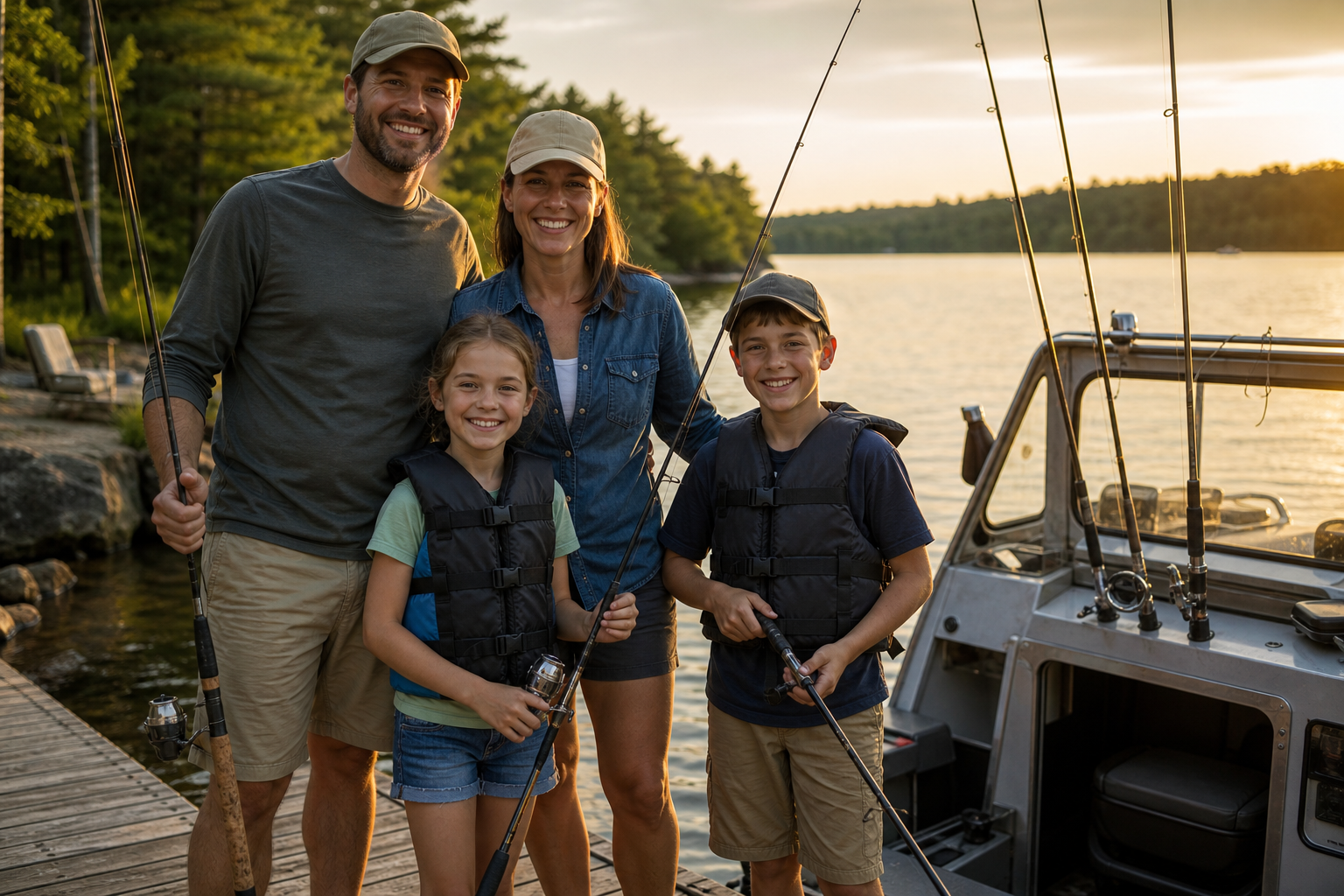
Private charters allow families and groups to set the pace for their own sport fishing trip.
Sport Fishing Myrtle Beach Costs and Trip Length
Pricing for sport fishing Myrtle Beach charters depends on trip type, boat size, and duration rather than a flat per-person rate, since every trip is private. Inshore and backwater trips are generally shorter, often running three to five hours, which keeps costs lower and suits families with younger children. Nearshore trips tend to run a bit longer, balancing travel time to reefs or wrecks with time actually fishing.
Offshore, deep sea, and Gulf Stream trips require the most time on the water, frequently lasting six to ten hours or more to reach distant fishing grounds and return safely. As a result, these trips typically carry higher costs, reflecting fuel, distance, and the extended charter time. For a closer look at how offshore pricing and logistics work, the deep sea fishing guide breaks down what to expect on longer trips.
Because boat capacity, amenities, and availability vary by charter, confirming details directly with the operator before booking is the most reliable way to match budget with trip goals.
Frequently Asked Questions
What is sport fishing in Myrtle Beach?
Sport fishing Myrtle Beach refers to private saltwater fishing trips along the Grand Strand, covering everything from inshore creeks to offshore and Gulf Stream waters. Trip type and target species depend on location, season, and conditions.
What is the best time of year for sport fishing near Myrtle Beach?
Spring and fall generally offer stable conditions and active fish migrations. Summer provides consistent offshore opportunities, while winter favors inshore trips in protected waterways.
How far offshore do you have to go for sport fishing in Myrtle Beach?
Nearshore reefs and wrecks sit a few miles out, while deep sea and Gulf Stream trips can travel 40 to 60 miles or more. The captain selects the distance based on the booked trip type and sea conditions.
Do I need a fishing license for a Myrtle Beach charter?
No separate license is needed when booking with Low Country Fishing Charters, since required fishing licenses are included with every private trip.
What species can you catch sport fishing in Myrtle Beach?
Inshore trips commonly target redfish, flounder, and trout, while nearshore and offshore trips pursue species such as king mackerel, mahi-mahi, and bottom fish. Specific catches are never guaranteed and depend on season and conditions.
How much does a private sport fishing charter cost in Myrtle Beach?
Pricing varies by trip type, boat size, and trip length, with inshore trips typically costing less than offshore or Gulf Stream excursions. Because every trip is private, costs are calculated per charter rather than per person.
How long does a sport fishing trip in Myrtle Beach last?
Trip lengths commonly range from four hours for inshore outings to eight hours or longer for deep sea and Gulf Stream trips. Captains help choose a duration based on the group’s goals and experience level.
Is sport fishing in Myrtle Beach good for beginners and kids?
Yes, inshore and backwater trips suit families, children, and first-time anglers well because waters are calmer and captains provide hands-on instruction. More experienced anglers often prefer nearshore or offshore trips for a greater challenge.
What is the difference between inshore and offshore sport fishing?
Inshore fishing takes place in protected creeks, marshes, and brackish waterways close to shore, while offshore fishing travels into deeper ocean water to reach reefs, wrecks, and the Gulf Stream. Each style targets different species and suits different comfort levels.
What happens if the weather is bad on the day of a sport fishing trip?
USCG-licensed captains monitor weather and sea conditions and make the final call on whether a trip can safely operate. If conditions are unsafe, the captain works with the booking party on rescheduling options.
What should I bring on a sport fishing charter?
Guests typically bring sunscreen, weather-appropriate clothing, non-slip shoes, snacks, and drinks, since rods, reels, bait, tackle, and licenses are already included. Motion sickness medication is also recommended for offshore and Gulf Stream trips.
Can I book a private sport fishing charter for a group in Myrtle Beach?
Yes, charters are reserved exclusively for the booking party, which makes them a good fit for families, groups of friends, and corporate outings. Boat capacity and availability depend on the specific charter selected.
What is a common mistake people make when booking a sport fishing trip?
A common mistake is choosing a trip type based on budget alone without considering the group’s experience, comfort with ocean motion, and target species interest. Discussing goals with the captain beforehand helps match the right trip to the group.
Final Thoughts on Planning Your Trip
Ultimately, sport fishing Myrtle Beach offers something for nearly every type of angler, from a quiet morning in the marsh to a full day chasing pelagic species in the Gulf Stream. By matching trip type to your group’s experience, target species, and the season, you can set realistic expectations before you ever step on the boat. Furthermore, booking with a USCG-licensed captain who plans around tides and weather helps ensure a safer, more productive outing.
For additional planning tips, including how to compare charters and trip options, the best charters and trip tips guide and the Myrtle Beach fishing guides page offer further detail. Specifics on regulations and conservation can also be reviewed through the NOAA Fisheries resource and the South Carolina Department of Natural Resources. When you are ready, you can check availability and book a private sport fishing charter directly through Low Country Fishing Charters.



